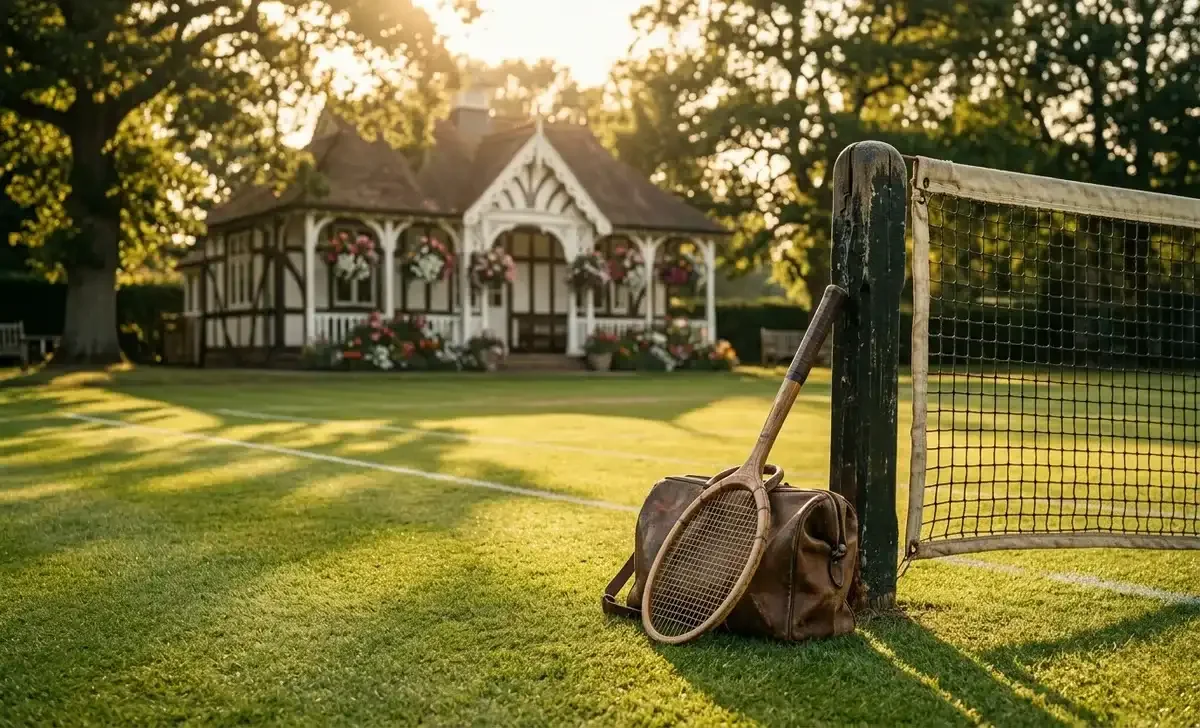
Walk into Wimbledon on a warm July afternoon and you'll feel it immediately. Something about the clipped grass, the all-white uniforms, the hush before a serve — it reaches back in time. Tennis doesn't just have a history. It has heritage.
The tennis heritage we celebrate today stretches back to medieval French monasteries, Victorian garden parties, and smoky gentlemen's clubs where the rules of the modern game were debated over brandy. Understanding where tennis came from makes watching it — and playing it — a completely different experience.
In this post, we'll walk through 10 of the most fascinating aspects of tennis heritage: the origins, the iconic venues, the legendary players, the traditions that have stood for centuries, and the moments that changed the game forever. Whether you're a lifelong fan or just getting into the sport, this is the story behind every serve, volley, and championship trophy.
1. The Medieval Origins of Tennis
Long before yellow balls and carbon-fiber rackets, tennis began in the cloisters of French monasteries around the 11th and 12th centuries. Monks would hit a ball back and forth using the palms of their hands — a game they called jeu de paume, which literally means "game of the palm."
The game then spread to French nobility. By the 14th century, King Louis X had become such an avid player that he is often cited as the first recorded tennis player in documented history. The game eventually became a popular pastime in French medieval courts, far removed from its humble monastery origins.
The word "tennis" itself may derive from the French verb tenez — roughly meaning "hold" or "here it comes" — which players would shout to their opponents before serving. Even the word "racquet" has debated roots, with some historians linking it to the Arabic word rahat, meaning "palm of the hand." If you've ever wondered what "love" means in tennis scoring, or why the points run 15-30-40 rather than 1-2-3, this guide to tennis scoring and its origins does an excellent job of untangling the linguistic history behind the game's most puzzling conventions.
This linguistic and cultural crossover tells you something important: tennis was never just a sport. From its very beginning, it was a meeting point of cultures, languages, and social classes.
2. The Birth of Lawn Tennis
In 1873, Major Walter Wingfield invented a version of tennis that could be played outdoors on a lawn. He called it Sphairistike, from the Greek for "playing ball," and it was initially popular among wealthy English guests at manor house parties.
The timing couldn't have been better. Victorian England had a growing leisure class eager for outdoor activities, and Wingfield's portable court kit — sold in a box — made the game accessible to anyone with a decent-sized garden.
The game spread rapidly through social networks of the time. Within a few years, clubs were forming across England, and competing sets of rules were creating confusion among players. That tension eventually pushed the sport toward standardization — and toward its most iconic venue.
Key fact: Yellow tennis balls replaced white ones in 1972 to improve visibility on television, and the tie-break system was introduced in the 1970s to prevent marathon matches.
3. The First Wimbledon Championship (1877)
Wimbledon traces its origins to 1877 when the All England Croquet and Lawn Tennis Club organized the inaugural tournament. Initially focused solely on men's singles, only 22 players participated.
That first tournament is a cornerstone of tennis heritage. The rules established at Wimbledon that year largely became the foundation of the modern game. It was a defining moment — a small gathering of Victorian gentlemen that launched the world's most prestigious sporting tradition.
Wimbledon's playing surface has been a key element of its identity from the very start. The grass, cut to 8 mm, offers a low and fast bounce, favoring an aggressive, attacking style of play.
Today, Wimbledon draws tens of thousands of spectators and hundreds of millions of television viewers. But at its heart, it remains connected to that very first match played on a modest English lawn almost 150 years ago.
4. The Grand Slam Era
The term "Grand Slam" in tennis refers to winning all four major tournaments — Wimbledon, the US Open, the French Open, and the Australian Open — in a single calendar year. It's one of the rarest achievements in all of sport.
Each of the four Slams has its own distinct heritage:
- Wimbledon (1877) — The oldest, played on grass in London
- US Open (1881) — Originally called the US National Championships
- French Open (1891) — The premier clay court event, held at Roland-Garros
- Australian Open (1905) — The youngest of the four, held in Melbourne
Since the mid-1920s, these four tournaments became and have remained the most prestigious events in tennis. Winning even one Grand Slam is a career-defining achievement. Winning all four in a row — the "Calendar Slam" — has been achieved only a handful of times in history.
5. Tennis Goes Olympic
Tennis has a complicated Olympic history that most fans don't know about. Tennis was first included in the Olympics in 1896, then removed in 1924, and finally reintroduced in 1988.
The 64-year absence from the Games was largely due to disputes between tennis governing bodies and the International Olympic Committee over amateur status rules. Professional players were excluded for decades, which created an awkward tension between the sport's elite competition and the Olympic ideal.
When tennis returned to the Olympics in Seoul in 1988, it immediately recaptured public attention. Today, an Olympic gold medal sits alongside Grand Slam titles as one of the sport's most coveted prizes — part of what some players chase as a "Golden Slam."
6. The Evolution of the Racket
The racket is arguably the most important technological artifact in tennis heritage. Its transformation over eight centuries mirrors the sport's entire evolution.
- 12th century — Bare palms, then leather gloves
- 16th century — Wooden frames strung with sheep gut
- 19th century — Laminated wood with more defined frames
- 1967 — Metal frames introduced, enabling more power
- 1976 — Oversized racket heads introduced, increasing the sweet spot
Racket frames, which had been of a standard size and shape and constructed primarily of laminated wood, were suddenly manufactured in a wide choice of sizes, shapes, and materials, with the introduction of metal frames in 1967 and the oversized head in 1976 marking the most significant milestones.
Today's rackets are made from graphite, carbon fiber, and Kevlar composites — lighter and more powerful than anything those medieval monks could have imagined. Each technological leap changed how the game was played and who could play it competitively.
7. Iconic Rivalries That Defined Tennis History
No exploration of tennis heritage is complete without the rivalries. These weren't just competitive matches — they were clashes of personalities, styles, and eras that captivated entire generations.
Borg vs. McEnroe — The ice-cold Swede against the fiery American. Their 1980 Wimbledon final is widely considered the greatest match ever played.
Navratilova vs. Evert — 80 matches over nearly two decades. A rivalry so long and so close that it defined women's tennis throughout the 1970s and 80s.
Federer vs. Nadal vs. Djokovic — The modern triumvirate who collectively reshaped what it means to be a tennis great. Their head-to-head records and Grand Slam tallies have sparked debates that will last for generations.
Rivalries like these turn sporting moments into lasting cultural memories. They're the stories that get passed down from parent to child at courtside seats.
8. The All-White Dress Code and Other Timeless Traditions
The players' all-white dress code, the consumption of strawberries and cream, and the iconic Wimbledon queue are just a few of the enduring traditions that set the tournament apart from every other Grand Slam.
The all-white rule dates back to the Victorian era, when perspiration was considered impolite — white clothing was thought to conceal it better. Today, the rule is strictly enforced: even logos and trims must be predominantly white. Players who show up with coloured accents are sent back to change.
Wimbledon's traditions also include royal patronage, no advertising on the courts, a resident hawk named Rufus who keeps pigeons away, and spectator queuing that has become a cultural ritual in itself. For international visitors making the pilgrimage to SW19, the full Wimbledon experience pairs naturally with the wider luxury of London — much as tennis tourism more broadly has grown into a pursuit worth planning carefully, whether you're attending a Grand Slam in Paris, Melbourne, or New York. Staying in the right place matters, and properties like the Mandarin Oriental Miami represent the kind of world-class hospitality that today's tennis traveller has come to expect at major tournament destinations.
These aren't arbitrary quirks. They're living threads connecting modern tennis to its Victorian roots — a conscious choice to honor where the game came from.
9. Women's Tennis and the Fight for Equality
Women's tennis has its own powerful heritage — one that includes not just athletic achievement, but social progress. The French Championships opened to women players for the first time in 1897, just decades after the sport itself was codified.
The real turning point came in 1973, when Billie Jean King defeated Bobby Riggs in the famous "Battle of the Sexes" — a match watched by an estimated 90 million people worldwide. It wasn't just a tennis match. It was a statement.
King went on to fight for equal prize money, helping found the Women's Tennis Association (WTA) and pushing the US Open to become the first Grand Slam to offer equal pay to men and women. Wimbledon followed in 2007.
The names who carried women's tennis forward — Navratilova, Graf, Seles, the Williams sisters — didn't just win trophies. They expanded what the sport could be and who it was for.
10. The Open Era — When Tennis Changed Forever
Before 1968, professional players were banned from Grand Slam tournaments. The sport was split between amateurs who could play the majors and professionals who earned money but were excluded from the biggest stages.
The Open Era began in 1968, when the major tournaments finally allowed professionals to compete. It was a watershed moment. Suddenly, the best players in the world could compete against each other at the highest level.
From its origins as a garden-party game for ladies in whalebone corsets and starched petticoats and men in long white flannels, tennis evolved into a physical chess match in which players attack and defend, exploiting angles and technical weaknesses with strokes of widely diverse pace and spin.
The Open Era didn't just change who could play. It supercharged the sport commercially, culturally, and athletically — laying the groundwork for everything we love about tennis today. That commercial transformation also created an entirely new class of tennis professional: players who travel the globe for 30+ weeks a year, living out of hotel rooms and airport lounges. Many of today's touring pros and passionate tennis followers alike have embraced a lifestyle that blurs the line between sport and travel — not unlike the broader shift toward location-flexible work that has redefined how people earn a living remotely while exploring the world.
Expert Tips for Exploring Tennis Heritage
If you want to go beyond watching matches and truly connect with tennis history, here's where to start:
- Visit the Wimbledon Museum — It's open year-round and covers everything from early rackets to iconic trophies. A must for any serious fan.
- Read the biographies — Books by or about Billie Jean King, Andre Agassi, and Martina Navratilova offer perspectives no highlight reel can match.
- Watch classic match footage — The 1980 Wimbledon final (Borg vs. McEnroe) and the 2008 final (Federer vs. Nadal) are essential viewing.
- Learn the scoring system's history — Understanding that the 15-30-40 system likely evolved from a medieval clock face adds real depth to every game you watch.
- Visit Roland-Garros — The French Open venue hosts a tennis museum and has a completely different historical atmosphere to Wimbledon — earthy, passionate, and unmistakably Parisian.
The more you know about where tennis came from, the richer every match becomes.
Common Mistakes to Avoid
When learning about or writing about tennis heritage, these are the errors that come up most often:
- Confusing real tennis with lawn tennis — Real tennis (or court tennis) is the ancient indoor game still played by a small community worldwide. Lawn tennis is what we watch on TV. They're related but very different.
- Assuming Wimbledon invented modern tennis — It standardized and popularized it, but the rules had been developing for years before 1877.
- Overlooking women's tennis history — The women's game has as rich a heritage as the men's, with equally fierce competition and even more dramatic social significance.
- Thinking the Open Era is "modern history" — 1968 is more than 55 years ago. Several generations of players have come and gone since then.
- Ignoring non-European contributions — While England and France dominate early tennis history, the sport's global spread — through Australia, the US, and beyond — is equally important to the full story.
FAQs
Q1: What is the origin of tennis heritage?
Tennis heritage begins in 12th-century France with a handball game called jeu de paume, played by monks in monastery courtyards. The game evolved through French and English nobility before Major Walter Wingfield formalized outdoor lawn tennis in 1873. The first official tournament at Wimbledon in 1877 cemented the sport's modern identity.
Q2: Why is Wimbledon so important to tennis heritage?
Wimbledon is the oldest Grand Slam and the tournament where many of the sport's core rules and traditions were established. Its all-white dress code, grass courts, strawberries and cream, and royal patronage make it a living museum of tennis history — a place where the sport's past and present exist side by side.
Q3: Who are the most significant figures in tennis heritage?
Key figures include Major Walter Wingfield (who formalized lawn tennis), King Henry VIII (a famous real tennis enthusiast), Billie Jean King (who transformed women's tennis and fought for equal prize money), and modern greats like Roger Federer, Rafael Nadal, and Serena Williams, who defined the sport for an entire generation.
Q4: What does "real tennis" mean in the context of tennis heritage?
Real tennis (called court tennis in the US and royal tennis in Australia) is the ancient indoor predecessor to modern lawn tennis. It's still played today by enthusiasts in purpose-built courts. The game is far more complex than modern tennis, with walls, sloped roofs, and intricate rules — a true piece of living history.
Q5: How has tennis heritage influenced the modern game?
Almost everything about modern tennis — the scoring system, court dimensions, net height, and etiquette — traces back directly to decisions made in the 19th century. Even the word "love" for zero has disputed medieval roots. Heritage isn't just history in tennis; it's baked into every aspect of how the game is played and experienced today.