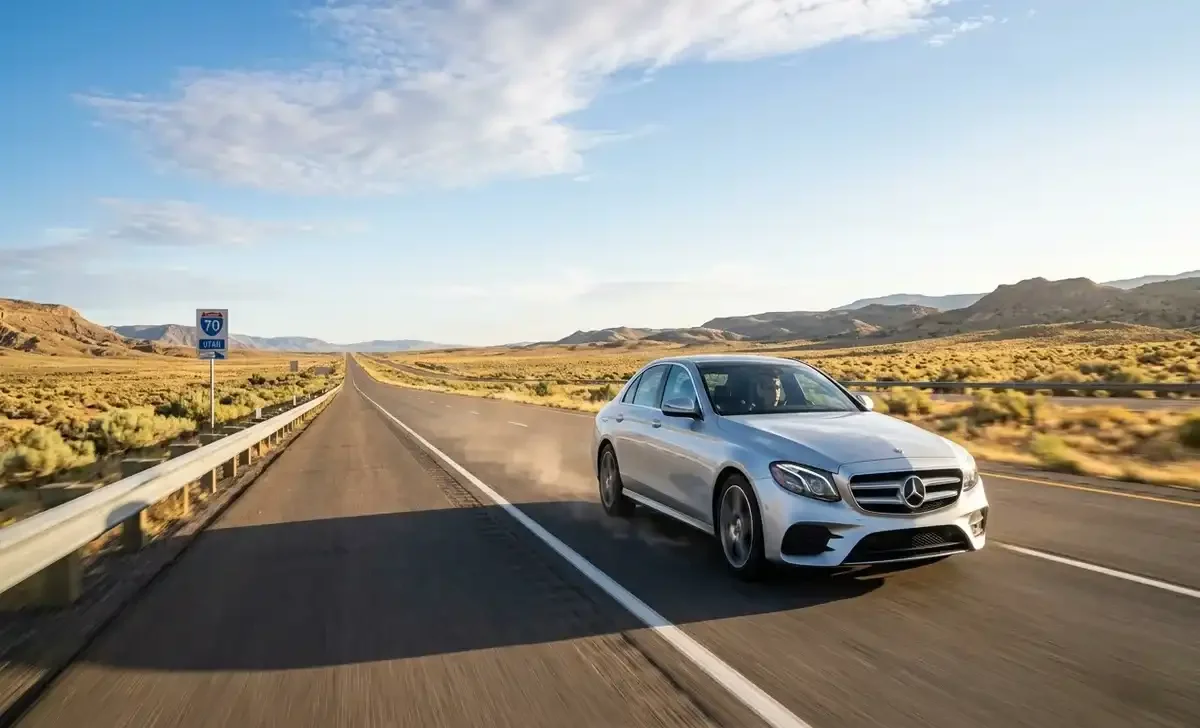
American highways are unlike roads anywhere else in the world. You've got long, straight stretches through the desert, mountain passes in the Rockies, and bumper-to-bumper interstate traffic in cities like Los Angeles and Atlanta. Finding the best car for American highways means balancing fuel efficiency, comfort, safety, and value — all at the same time.
The good news? You don't need to spend $60,000 to drive well on American roads. Some of the most highway-capable cars on the market today are surprisingly affordable. In this guide, we've researched, compared, and ranked the top 10 options across different budgets and driving styles.
Whether you're a daily commuter, someone who just wants a car that feels planted at 75 mph, or one of the growing number of Americans embracing high-paying remote jobs and the digital nomad lifestyle — spending weeks at a time driving between cities and states — there's something on this list for you.
1. Toyota Camry Hybrid
Starting Price: ~$29,000
If one car defines reliable highway driving in America, it's the Toyota Camry Hybrid. This thing is a proven workhorse. Get on any highway in the U.S. and you'll spot at least three within a mile — and there's a reason for that.
The Camry Hybrid gets around 47 mpg on the highway, which means fewer stops and more miles per dollar. The cabin is impressively quiet at speed, noise insulation is genuinely one of the best in its class. Ride quality is smooth and composed, even on rough interstate asphalt.
Toyota's Safety Sense suite comes standard, including radar cruise control, lane departure alert, and automatic emergency braking — features that make long highway hauls far less exhausting.
Pros:
- Outstanding fuel economy
- Industry-leading reliability record
- Comfortable cabin for long drives
- Strong resale value
Cons:
- Styling is conservative (subjective, but real)
- Hybrid system can feel sluggish at lower speeds
2. Honda Accord
Starting Price: ~$28,000
The Honda Accord has been competing with the Camry for decades, and it still holds its own. On the highway, the Accord feels sporty without sacrificing comfort — a rare balance that most sedans miss.
The turbocharged 1.5L engine delivers enough power for confident highway merging and passing, while the 2.0L turbo option takes things up a notch for those who want a more spirited drive. Honda Sensing comes standard across all trims, giving you adaptive cruise control and lane-keeping assistance.
Fuel economy lands around 38 mpg highway for the base engine — solid, if not class-leading. What really sets the Accord apart is the interior. It feels more premium than its price tag suggests, with a spacious back seat and a logical infotainment layout.
Pros:
- Engaging highway driving feel
- Premium interior quality
- Plenty of passenger room
- Reliable long-term ownership
Cons:
- Touchscreen controls take getting used to
- Smaller trunk than some rivals
3. Chevrolet Malibu
Starting Price: ~$23,000
For budget-focused buyers, the Chevrolet Malibu is one of the most underrated highway sedans on the market. It's often overlooked in favor of Japanese brands, but it punches well above its price point.
The Malibu offers a composed ride, solid highway manners, and a well-appointed interior. The 1.5L turbocharged engine isn't exciting, but it's efficient — returning around 36 mpg on the highway. The cabin is quieter than you'd expect for the price, and the seats are genuinely comfortable on long drives.
General Motors has improved reliability significantly over the last several years. While the Malibu doesn't quite match Toyota or Honda on long-term dependability stats, it's competitive enough for most buyers — especially given the significant price advantage.
Pros:
- Lowest price among top picks
- Comfortable highway ride
- Good fuel efficiency for the money
- Often available with strong incentives
Cons:
- Reliability slightly below Japanese competitors
- Less refined powertrain feel
4. Hyundai Sonata
Starting Price: ~$25,000
Hyundai has quietly become one of the most impressive automakers in the midsize sedan segment. The Sonata looks better than most competitors, drives well, and comes loaded with features at every price point.
On the highway, the Sonata feels stable and well-balanced. The standard 2.5L four-cylinder engine produces 191 horsepower — enough for smooth highway driving without feeling stressed. Highway fuel economy sits around 38 mpg.
The interior is where Hyundai really shines. The 10.25-inch touchscreen, wireless Apple CarPlay, and driver assistance package all come standard. You'd pay more for these features in a Toyota or Honda. Hyundai also offers one of the best warranties in the business: 5-year/60,000-mile bumper-to-bumper and 10-year/100,000-mile powertrain coverage.
Pros:
- Bold, modern styling
- Feature-rich at every trim level
- Industry-best warranty
- Solid highway comfort
Cons:
- Brand perception still catching up to quality
- Resale value improving but not class-leading
5. Kia K5
Starting Price: ~$24,000
The Kia K5 is essentially a Sonata in a sharper suit — and that's meant as a compliment. Kia's design language is aggressive and distinctive, which makes the K5 one of the best-looking cars in the midsize segment.
Driving dynamics are genuinely fun. The base engine is peppy, and the optional 290-horsepower turbocharged engine turns the K5 into a legitimate performance sedan. On the highway, the K5 stays planted and feels more athletic than most family cars.
Like the Sonata, it comes with Kia's 10-year powertrain warranty and a full suite of safety features as standard equipment. If you want a car that doesn't look like every other sedan on the interstate, the K5 stands out without asking you to sacrifice practicality.
Pros:
- Standout design
- Performance-focused driving feel
- Powerful optional engine
- Same warranty as Hyundai Sonata
Cons:
- Ride can feel firm on rough roads
- Rear seat headroom slightly tighter than competitors
6. Nissan Altima
Starting Price: ~$25,000
The Nissan Altima has one feature no other car in this segment offers: standard all-wheel drive across the lineup. For drivers in states like Colorado, Minnesota, or the Pacific Northwest, that's a meaningful advantage — especially on mountain highways or in winter conditions.
Highway comfort is a strength. The Altima rides smoothly and quietly, with a cabin tuned for relaxed cruising rather than sport driving. The 2.5L four-cylinder returns around 39 mpg on the highway. A turbocharged VC-Turbo engine option delivers 248 horsepower for those who want more punch.
ProPilot Assist — Nissan's semi-autonomous highway driving system — is available on higher trims and genuinely reduces fatigue on long highway stretches.
Pros:
- Only midsize sedan with standard AWD option
- Smooth, quiet highway ride
- Available semi-autonomous driving system
- Good fuel economy
Cons:
- Interior quality lags behind Hyundai and Honda
- CVT transmission isn't to everyone's taste
7. Subaru Legacy
Starting Price: ~$24,000
The Subaru Legacy is the only car on this list that offers standard all-wheel drive on every single trim — not as an option, but as a given. If you live somewhere with harsh winters or drive through mountain states regularly, this matters more than most specs on a window sticker.
Beyond AWD, the Legacy is a comfortable, practical highway car. The interior is spacious, Subaru's EyeSight driver assistance technology is among the best in the business, and the ride quality is settled and confidence-inspiring.
Fuel economy around 35 mpg highway isn't class-leading, but it's reasonable given the permanent AWD system. The optional 2.4L turbocharged engine lifts performance significantly without a huge fuel economy penalty.
Pros:
- Standard AWD on every trim
- Excellent safety ratings
- Roomy interior
- Genuine all-weather capability
Cons:
- Styling is bland compared to rivals
- Base fuel economy lower than front-wheel-drive competitors
8. Ford Fusion Hybrid (Used Market)
Price Range: $10,000 – $18,000 used
Ford discontinued the Fusion after 2020, but the used market is full of excellent examples — especially the Fusion Hybrid and Fusion Energi (plug-in hybrid). For budget buyers who want maximum highway fuel economy, this is a seriously compelling option.
The Fusion Hybrid delivers around 41 mpg combined, with highway numbers even better on long, steady-speed drives. The interior is comfortable and well-designed, and the car handles well for a family sedan. Ford's SYNC 3 infotainment system aged well and remains intuitive.
Buying used means you get more car for less money — a well-maintained 2018–2020 Fusion Hybrid with under 60,000 miles can be had for a fraction of new car prices.
Pros:
- Exceptional value in the used market
- Great fuel economy
- Comfortable highway ride
- Available as plug-in hybrid
Cons:
- No longer in production (limited new inventory)
- Technology feels slightly dated compared to 2025 rivals
9. Tesla Model 3
Starting Price: ~$38,990
Yes, it costs more upfront. But the Tesla Model 3 changes the calculus of highway ownership so fundamentally that it earns its spot on this list. Supercharger network coverage across American interstates is now genuinely excellent, making long-distance trips practical.
On the highway, the Model 3 is in a different league. The acceleration is effortless, the cabin is whisper quiet, and Tesla's Autopilot system handles highway driving with impressive confidence. Range on the Long Range AWD version exceeds 350 miles — more than enough for a full day of highway driving between charges.
Factor in federal tax credits (up to $7,500 depending on eligibility), lower fuel costs, and minimal maintenance, and the total cost of ownership often rivals conventional gas-powered sedans over a five-year period. It's also worth thinking carefully about how you plan to finance the purchase — with fintech innovation reshaping how Americans manage and borrow money, there are now more flexible financing options available than ever before for bigger purchases like this.
Pros:
- Dominant highway performance and range
- Excellent Autopilot capability
- Low long-term ownership costs
- Supercharger network is genuinely convenient
Cons:
- Higher upfront cost
- Charging still requires planning in rural areas
- No physical controls take adjustment
10. Mazda6
Starting Price: ~$26,000 (Note: Mazda discontinued the 6 in the U.S. in 2023, but it's widely available new old stock and used)
The Mazda6 is the driver's pick of the group. Mazda engineers this car with a genuine passion for how it handles, and it shows. On the highway, the Mazda6 feels more like a European luxury sedan than a mainstream midsize car.
The turbocharged engine option delivers 227 horsepower and a torque delivery that makes highway passing a pleasure. Interior quality is genuinely upscale — soft-touch materials, premium audio, and a clean layout that feels timeless rather than trendy. Fuel economy around 35 mpg highway isn't class-leading, but it's respectable.
For buyers who see driving as more than just transportation, the Mazda6 delivers something the others on this list struggle to match: genuine driving pleasure.
Pros:
- Best driving dynamics in the segment
- Premium interior quality above its price
- Refined turbocharged powertrain
- Elegant, understated styling
Cons:
- Discontinued in U.S. (limited to new old stock and used)
- No hybrid option
- Infotainment system shows its age
Expert Tips for Highway Driving
Getting the right car is step one. Getting the most out of it on American highways takes a bit more thought.
Tire pressure matters more than you think. Under-inflated tires increase rolling resistance and reduce fuel economy significantly on long highway hauls. Check pressure monthly.
Use cruise control consistently. Small variations in speed — even 5 mph fluctuations — can drop fuel economy by 10–15%. Cruise control smooths that out.
Plan fuel stops and destinations strategically. GasBuddy and similar apps can save you real money over a long trip by routing you past cheaper stations. On a 1,000-mile trip, this can easily save $20–$30. And if you're planning a longer drive with an overnight stop, booking ahead pays off — destination hotels like the Mandarin Oriental Miami are popular endpoints for East Coast highway travelers, and rates rise fast when you leave it to the last minute.
Choose the right trim level. Adaptive cruise control and lane-keeping assistance aren't just luxury features — they meaningfully reduce fatigue on long highway drives. Budget for at least a mid-level trim if you do a lot of highway miles.
Break in your car properly. For the first 1,000 miles, vary your speed rather than running at a constant 80 mph. This helps seat piston rings evenly and extends engine life.
Common Mistakes to Avoid
Prioritizing zero to 60 mph time over highway efficiency. A car that launches hard at a stoplight and gets 25 mpg at 75 mph costs you significantly more per mile than one with modest acceleration and 40 mpg highway. Know how you actually drive.
Ignoring wind noise. Test drive at highway speeds before buying. Some cars that feel luxurious at 30 mph become wind tunnels at 75 mph. This gets exhausting fast on long trips.
Skipping safety tech to save money. Features like adaptive cruise control, blind spot monitoring, and automatic emergency braking are especially valuable on highways where distractions are dangerous and speeds are high. They're worth the upgrade cost.
Underestimating long-term fuel costs. A $2,000 price difference between two cars can be completely erased within two years if one gets 30 mpg and the other gets 40 mpg. Run the real numbers before deciding.
Buying based on brand loyalty alone. The sedan segment has leveled up dramatically. Hyundai, Kia, and Mazda now match or beat traditional leaders in quality and features. Keep an open mind during your search.
FAQs
Q: What is the most fuel-efficient car for American highways?
The Toyota Camry Hybrid leads the mainstream segment with around 47 mpg highway. If you're open to electric vehicles, the Tesla Model 3 Long Range eliminates fuel costs entirely on highway trips between Supercharger locations.
Q: Is a sedan or SUV better for American highway driving?
Sedans generally outperform SUVs on highway fuel economy and stability due to their lower center of gravity and better aerodynamics. SUVs offer more cargo and passenger space but sacrifice efficiency. For pure highway performance, a sedan like the Accord or Camry is the smarter choice.
Q: How important is AWD for highway driving?
On dry, clear interstates, AWD offers minimal benefit. However, if you regularly drive in states with winter weather or through mountain passes, it adds meaningful safety. The Subaru Legacy and Nissan Altima are the best AWD options in this category.
Q: What is the best used car for American highway driving?
A used Toyota Camry Hybrid (2018–2022) or Ford Fusion Hybrid offers exceptional value. Both deliver strong fuel economy, comfortable highway rides, and proven reliability at prices well below new car alternatives.
Q: How do I choose between hybrid and electric for long highway trips?
Hybrids are simpler for long trips since refueling is identical to a gas car. EVs like the Tesla Model 3 require charging planning but offer lower per-mile costs and an increasingly dense Supercharger network. If your route passes through less populated areas, a hybrid is the safer choice for now.