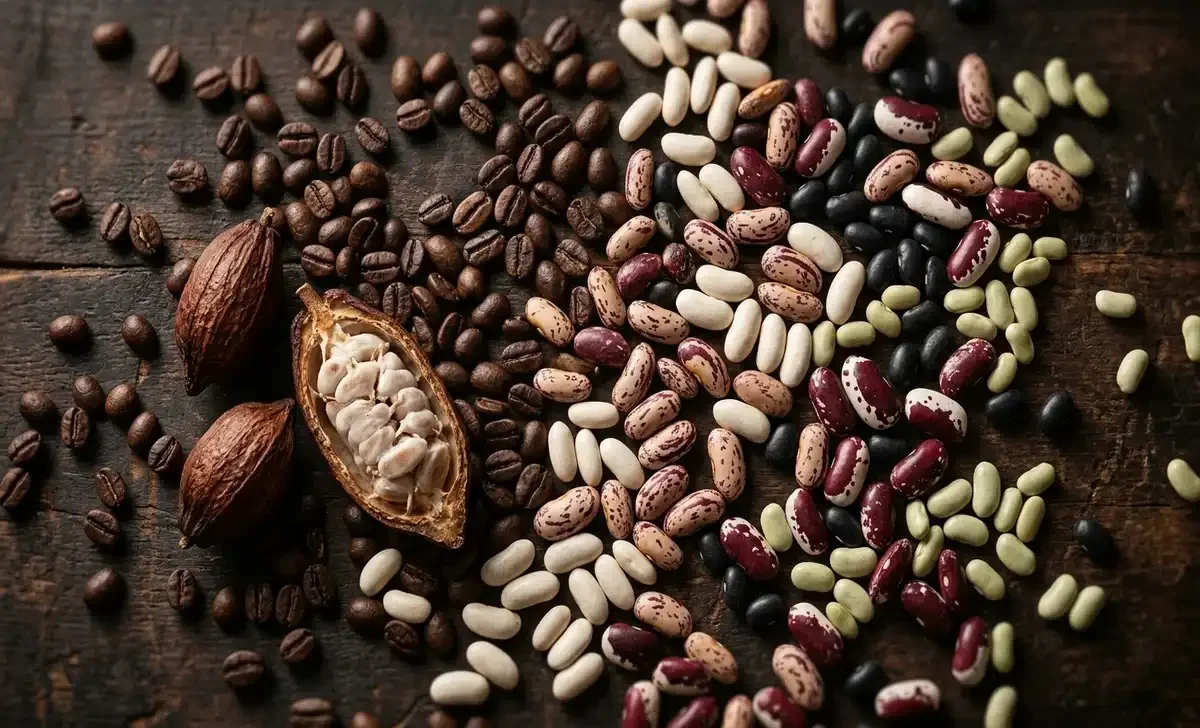
There's a moment every serious coffee drinker or home cook eventually experiences — the first sip or bite that makes everything before it feel ordinary. That's what premium beans do. Whether you're hunting for the finest specialty coffee or searching for heirloom culinary legumes that actually taste like something, this guide cuts through the noise.
The global market for premium beans has grown sharply over the last decade. Specialty coffee alone is now a multi-billion-dollar category, and heritage culinary legumes are appearing on Michelin-starred menus worldwide. But "premium" is also one of the most abused words in food marketing. This guide tells you exactly which varieties are genuinely worth the price, what separates them from mass-market alternatives, and how to avoid getting ripped off.
What Makes a Bean "Premium"?
Before diving into specific varieties, it helps to understand what premium actually means in practice. Genuine premium beans share four characteristics:
- Exceptional genetic variety — Geisha, Criollo, and heirloom culinary legumes have natural flavour complexity that commodity varieties simply don't.
- Optimal terroir — Altitude, soil, rainfall, and microclimate all affect flavour. The best beans come from specific regions where growing conditions are near-perfect.
- Careful processing — How a bean is dried, hulled, or fermented after harvest dramatically affects the final cup or dish.
- Traceability — Genuinely premium beans come with a story: farm name, harvest date, processing method. Vague labelling is a red flag.
For specialty coffee specifically, the Specialty Coffee Association (SCA) uses a 100-point scoring scale. Anything scoring 80 or above qualifies as specialty grade — and the best lots regularly score in the 90s.
The Best Premium Coffee Beans
1. Ethiopian Yirgacheffe
If one region put specialty coffee on the global map, it's Yirgacheffe. Grown at altitudes between 1,700 and 2,200 metres in southern Ethiopia, these beans develop extraordinary density and flavour complexity. Expect bright floral notes — jasmine, bergamot — alongside a clean, tea-like body and crisp acidity.
These are heirloom varietals, cultivated on small family farms using methods refined across generations. The farming approach itself is a form of innovation without technology — built on accumulated agricultural knowledge rather than mechanisation, producing results that modern industrial farming consistently fails to replicate.
Best brew methods: Pour-over, AeroPress, cold brew.
What to look for: Single-origin labelling, natural or washed process notation, roast date within the last 30 days.
Avoid: Dark roasts — they mask the delicate character that makes Yirgacheffe exceptional.
2. Jamaican Blue Mountain
Jamaican Blue Mountain holds near-mythical status in the coffee world, and its price tag reflects that. Only beans grown between 910 and 1,700 metres in Jamaica's Blue Mountains qualify for the designation, verified by the Coffee Industry Board of Jamaica. The flavour profile is famously smooth — low bitterness, mild acidity, creamy mouthfeel, with subtle nutty and chocolatey notes.
Authenticity is a serious concern here. Many products on the market contain only a small percentage of true Blue Mountain coffee. Always buy from a verified distributor and check for official barrel certification — authentic Blue Mountain is shipped in distinctive wooden barrels, a detail that should appear on the packaging.
Best brew methods: Drip coffee, French press.
Price point: Expect to pay a significant premium — anything suspiciously cheap almost certainly isn't genuine.
3. Hawaiian Kona (100%)
Grown on the volcanic slopes of Mauna Loa on Hawaii's Big Island, true Kona coffee benefits from rich lava soil, afternoon cloud cover, and consistent trade winds. The result is a smooth, rich cup with hints of brown sugar, hazelnut, and a subtle floral finish. Unlike many delicate specialty coffees, Kona performs well across a range of roast profiles.
The single biggest pitfall: "Kona blends" legally require only 10% actual Kona beans. Always insist on 100% Kona designation on the label.
Best brew methods: Drip coffee, espresso.
Price point: Expect $50–$80+ per pound for genuine 100% Kona. Cheap Kona is fake Kona.
4. Geisha / Gesha (Panama)
Originally from Ethiopia's Gesha forest, Geisha coffee was transformed into a specialty phenomenon through Panama's Hacienda La Esmeralda. Since a landmark 2004 auction shattered all previous price records, Geisha has defined the upper limit of what specialty coffee can achieve — and command.
The flavour is extraordinarily delicate: stone fruit, tropical flowers, jasmine, and a tea-like clarity that seems almost impossible in a roasted bean. The beans themselves are long and slender, visually distinctive before roasting.
Geisha from Colombia, Ethiopia, and Guatemala offer more accessible entry points, and several are genuinely excellent — worth exploring before committing to Panama's top-tier pricing.
Best brew methods: Pour-over, Chemex, cupping.
Who it's for: Those who appreciate nuance over boldness. Bold roast lovers often find it underwhelming.
5. Sumatra Mandheling
For drinkers who want power and depth rather than floral delicacy, Sumatra Mandheling is the answer. Grown in the highlands of Sumatra, Indonesia, these beans undergo a unique wet-hulling process called Giling Basah — parchment is removed at higher moisture content than typical processing, producing a distinctive, bold, earthy, full-bodied coffee with very low acidity.
Expect dark chocolate, cedar, tobacco, and damp earth. These beans punch through milk in lattes and flat whites like few others. Properly stored Sumatra beans can also develop even richer flavour over one to two years — a practice known as "vintage" or "aged" coffee that's gaining traction among collectors.
Best brew methods: Espresso, lattes, French press, dark roasts.
Best for: Milk-based drinks and anyone who finds lighter coffees underwhelming.
6. Bourbon Pointu (La Réunion)
Near-extinct and only recently revived, Bourbon Pointu from La Réunion island is one of the rarest premium coffees on earth. Napoleon reportedly favoured it. After nearly disappearing entirely, Japanese coffee experts played a key role in its recovery — and today production remains tiny, with prices to match.
The flavour is extraordinarily delicate and very low in caffeine naturally. It tastes clean and bright, with floral and citrus notes that fade gently rather than finish with bitterness. If you encounter it at a specialty café or auction, it's worth the experience at least once.
Best brew methods: Pour-over, Japanese-style slow drip.
Premium Cacao and Culinary Beans
7. Criollo Cacao Beans
Criollo cacao represents the premium tier of chocolate-making ingredients. Making up less than 5% of global cacao production, it's what luxury chocolate makers have quietly sourced for centuries. Unlike the common Forastero bean used in most commercial chocolate, Criollo has a naturally sweet, low-bitterness profile with complex fruity and nutty undertones.
Its delicate nature makes it highly susceptible to disease, which is why it's both rare and expensive. Venezuela, Madagascar, and Peru produce some of the world's finest Criollo. Look for bean-to-bar chocolate makers who list their cacao origin and variety — that transparency is itself a quality signal.
Best for: Fine chocolate making, dessert recipes, hot cacao drinks.
8. Heirloom Cannellini and Borlotti Beans
Not all premium beans come from a coffee tree. Heirloom Italian culinary beans — especially Cannellini and Borlotti — deserve serious attention in any cook's pantry. Mass-market dried beans are often old stock, meaning longer cooking times, mushier textures, and flat flavour. Freshly dried heirloom beans from small farms are supple, flavourful, and cook in a fraction of the time. They hold their shape, absorb seasonings beautifully, and carry a natural creaminess that makes tinned beans look like a compromise.
Many of the small farms producing these heirloom varieties are run by women-owned businesses preserving agricultural biodiversity while building thriving rural food enterprises — a growing and important part of today's artisan food economy.
Best for: Pasta e fagioli, ribollita, white bean hummus, salads.
Key tip: Look for the harvest year on packaging — aim for beans dried within the last 12 months.
9. Anasazi Beans
Native to the American Southwest and originally cultivated by the Ancestral Puebloans, Anasazi beans are a heritage culinary gem making a well-deserved comeback. Their striking burgundy-and-white marbled appearance fades slightly when cooked, but the flavour intensifies — sweet, earthy, and far less starchy than typical pinto beans. They also cook faster and are reportedly easier to digest.
Best for: Stews, chilis, refried beans, side dishes.
Where to find: Specialty food shops, heirloom seed companies, and direct-from-farm online retailers.
10. Tonka Beans
Tonka beans are a pastry chef's secret weapon. Native to South America, they carry an intoxicating aroma — warm vanilla, bitter almond, cinnamon, and clove simultaneously. Grated like nutmeg over desserts and custards, half a bean is enough to perfume an entire crème brûlée.
Important note: Tonka beans contain coumarin and are heavily restricted in some countries, including the USA, due to high-dose toxicity concerns. In culinary amounts, they're widely used across Europe and considered safe — but check your local regulations before ordering.
Best for: Crème brûlée, panna cotta, chocolate ganache, custard tarts.
How to Buy and Store Premium Beans: Expert Tips
- Buy fresh, buy small. Premium coffee beans are best within two to four weeks of the roast date. Buy what you'll use in a month, not what's on offer in bulk.
- Store correctly. Airtight container, away from light and heat. Never freeze opened bags — condensation damages flavour irreversibly.
- Grind fresh every time. Pre-ground specialty coffee loses most of its character within days. A quality burr grinder is the single best investment, alongside great beans.
- Match your brew method to the bean. Delicate washed Africans shine in pour-over; bold Indonesians work better in espresso or French press.
- For culinary beans, soak overnight. Add a pinch of baking soda. Season only at the end of cooking — salt added too early toughens the skins.
- Buy direct from small producers. Many roasters and bean farmers operate on thin margins. Small artisan businesses in the bean industry often thrive through collaboration rather than competition — a principle explored in depth in coopetition strategy for small businesses, where competitors work together to grow an entire category rather than fight over a fixed market.
Common Mistakes to Avoid
- Falling for misleading labels. "Kona blend," "Blue Mountain style," or "inspired by" means you're not getting the real thing — ever.
- Buying on price alone. Expensive doesn't automatically mean excellent. Learn the producers and origins you trust through small purchases first.
- Ignoring the roast date. A roast date three months old on specialty coffee is a red flag. Freshness is non-negotiable.
- Storing beans in the fridge. This introduces moisture and transfers food odours. Room temperature in an airtight container is always better.
- Dark-roasting premium varietals. Many coffees are sold dark-roasted specifically to mask lower-quality raw material. Light roasts preserve the unique terroir that makes premium beans worth the price.
- Skipping the harvest year on culinary beans. Old stock takes twice as long to cook, goes mushy, and lacks flavour depth — defeating the entire point of buying premium.
FAQs
What does "single-origin" mean on a coffee bag?
Single-origin means the beans come from one specific farm, cooperative, or region — rather than a blend of beans from multiple countries. This matters for premium beans because it preserves traceability and flavour identity. A Yirgacheffe single-origin tastes distinctly different from a Kona single-origin, and that specificity is precisely what you're paying for.
Are premium coffee beans worth the extra cost?
For anyone who brews at home with decent equipment, yes. A quality bag of specialty coffee typically costs £1–£1.50 per cup — significantly less than a café latte, and dramatically better than supermarket alternatives. The key is having the right brew method to match the bean.
How do I verify a premium bean label is authentic?
Look for third-party certifications, farm-specific names, roast dates, and processing method details. Jamaican Blue Mountain and Hawaiian Kona have official regulatory bodies. For specialty coffee broadly, check whether the roaster is a member of the Specialty Coffee Association (SCA).
Can I use specialty coffee beans in an espresso machine?
Yes, though very light-roasted specialty beans sometimes don't extract cleanly under pressure. Medium roasts of most premium varieties work well in espresso. Sumatra Mandheling and Kona are particularly well-suited to espresso preparation.
Where's the best place to buy premium beans online?
Specialty roasters with subscription models — Square Mile, Hasbean, Onyx Coffee Lab, Tim Wendelboe — are consistently reliable for coffee. For culinary beans, look for producers at farmers' markets or food-specific platforms that list harvest years and farm origins explicitly.
What's the difference between Geisha and other specialty coffees?
Geisha is a specific genetic variety, not just a processing or farming method. Its naturally elongated bean structure produces a flavour profile — floral, delicate, almost tea-like — that other varieties simply can't replicate, regardless of how well they're grown or processed. That genetic uniqueness is why it commands such premium prices at auction.