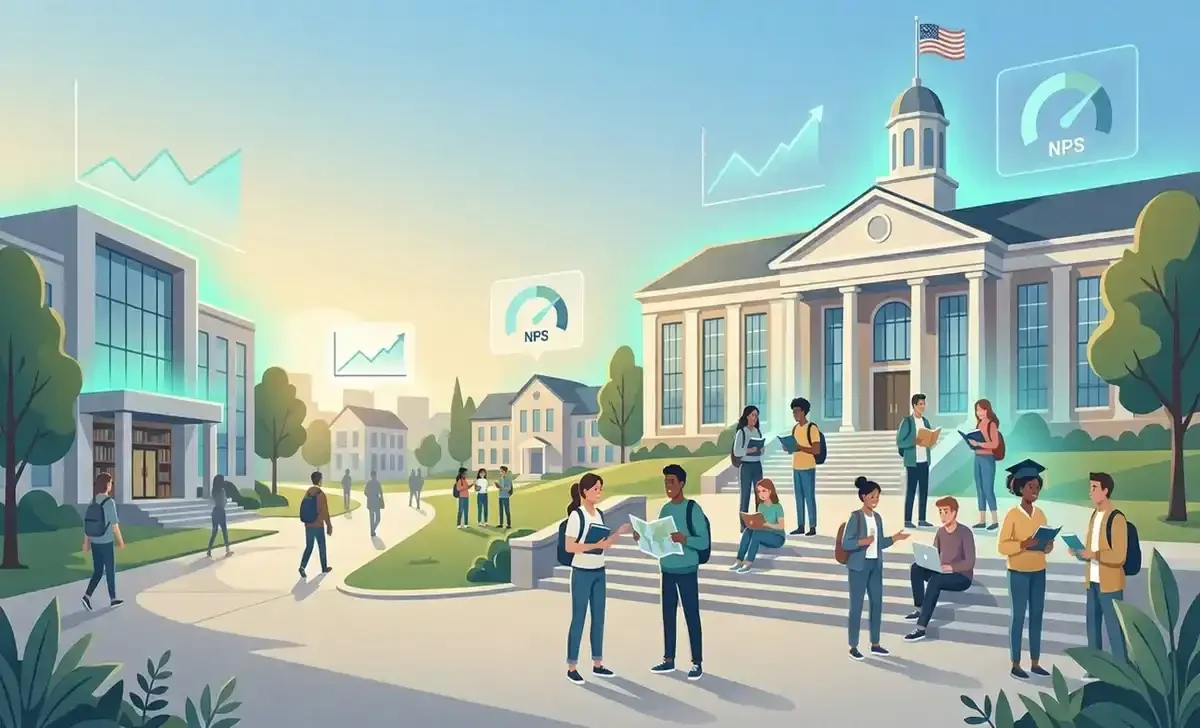
Universities do more than award degrees — they build the citizens democracies depend on to survive.
When political trust erodes, misinformation spreads, and civic participation drops, the question isn't just about policy failures. It's about whether societies are producing informed, engaged citizens capable of sustaining self-governance. Higher education sits at the center of that challenge. Every accredited university, community college, and liberal arts institution makes a daily choice about whether it serves that democratic mission or retreats from it.
This article breaks down 10 concrete, evidence-backed ways universities strengthen democracy — along with expert guidance, real-world examples, common institutional mistakes, and answers to the questions people are actually searching for. If you're a student, educator, policymaker, or anyone who cares about the future of free societies, understanding this relationship has never been more important.
What Is the Relationship Between Higher Education and Democracy?
Democracy requires more than elections. It requires citizens who can evaluate evidence, tolerate disagreement, hold power accountable, and participate meaningfully in civic life. Universities — when functioning at their best — are the primary institutions that develop all four of those capacities at scale.
Research from the National Conference on Citizenship consistently shows that bachelor's degree holders vote, volunteer, and engage in community organizations at significantly higher rates than those without degrees. But the connection runs deeper than turnout statistics. It's about the kind of thinking, habits, and civic identity that a university education cultivates.
Critical Thinking: Democracy's Core Requirement
Democratic self-governance fails when citizens cannot distinguish fact from manipulation. Universities build this foundational skill through philosophy courses that expose logical fallacies, research assignments that require source evaluation, and debate programs that train students to argue both sides of a position.
Practical example: A student who completes a semester-long rhetoric course learns to identify ad hominem attacks, false equivalencies, and emotional manipulation — skills directly transferable to evaluating political advertising and news media. That's not incidental. That's civic infrastructure.
This effect compounds over time. Graduates who enter professional life with strong analytical skills carry those habits into their communities, workplaces, and voting booths — creating a generational multiplier effect that no single civics class or public awareness campaign can replicate.
Free Speech and the Culture of Open Debate
Free societies depend on the ability to voice unpopular ideas, challenge authority, and advocate for change. Historically, universities have been among the few institutions that protect and model this culture. Campus debates, public lectures, and student newspapers create environments where disagreement is practiced — not punished.
The balance between free expression and protection from genuine harm is itself a democratic exercise. When universities navigate it well, they demonstrate to students that complex competing values can be worked through without authoritarian resolution.
Real example: Campus anti-apartheid protests in the 1980s pressured universities to divest from South Africa, contributing to international economic pressure that helped end the apartheid regime — a direct case of academic free expression driving geopolitical democratic change.
Civic Education and Political Participation
College graduates vote at measurably higher rates than non-graduates — but the more important outcome is how they engage. Civic education courses, government internship programs, and campus voter registration initiatives don't just increase turnout; they produce citizens who understand policy processes, track legislative action, and engage locally year-round.
Universities like Tufts, through their Tisch College of Civic Life, have embedded civic learning across every department — treating it not as a standalone elective but as a dimension of all professional education.
Key takeaway: Democracy doesn't just need more voters. It needs voters who understand the system they're participating in.
Diversity and Inclusion as Democratic Training
A democracy that functions only for dominant groups is structurally incomplete. Universities that prioritize racial, economic, gender, and cultural diversity create classrooms where students practice navigating difference — a skill democracy cannot function without.
Understanding why racism education is important is central to this mission. It equips students to recognize systemic inequalities and engage with them constructively rather than avoiding them — building the kind of cross-cultural competency that democratic compromise requires.
Outcome data: Research from the University of Michigan found that students in diverse educational environments showed stronger critical thinking, greater civic interest, and more sophisticated views on social issues compared to peers in homogenous settings.
Research That Directly Informs Public Policy
Governments making decisions without independent research rely on ideology alone — a dangerous foundation for democratic governance. Universities provide the evidence base that transforms public policy.
Examples include Johns Hopkins' research shaping U.S. gun violence legislation, MIT energy studies informing federal climate policy, and Harvard public health work driving pandemic response frameworks. Sustained investment in education is what keeps this research infrastructure intact — without it, universities cannot maintain the independent institutions that evidence-based democratic policymaking depends on.
Media Literacy as a Defense Against Misinformation
Misinformation is among the most acute threats to contemporary democracy. Social media algorithms amplify outrage over accuracy. Deepfakes blur the line between real and fabricated. Without the ability to evaluate information critically, citizens become easy targets for manipulation by both domestic and foreign actors.
Universities are responding with interdisciplinary media literacy programs that teach source verification, algorithmic awareness, and propaganda recognition — skills that journalism schools alone cannot scale to meet democratic need.
Practical example: The News Literacy Project, developed in partnership with universities across the U.S., has trained thousands of students to fact-check claims, trace image origins, and identify coordinated inauthentic behavior on social platforms.
Access and Equal Opportunity: The Structural Test
For higher education to truly serve democracy, it must be accessible to everyone — not just those born into economic privilege. When access is restricted to wealthy families, education becomes a mechanism for reproducing elite power rather than distributing civic capacity.
This is where many democracies currently fall short. Student debt has reached crisis levels. First-generation students face compounding barriers. Community colleges — which serve the most economically diverse populations — receive the least funding.
It is also worth noting that playing politics with scholarships has become an increasingly documented problem. When financial aid is distributed based on political or ideological considerations rather than merit and need, it undermines the foundational principle of equal access that democratic education depends on.
The solution path requires expanded need-based aid, stronger community college systems, and genuine outreach to underrepresented communities. Equal access to education is equal access to civic power.
Academic Freedom as a Check on Government Power
When governments are threatened by inconvenient research findings, they sometimes attempt to defund, discredit, or suppress them. Academic freedom — the principle that scholars can pursue truth without political interference — is itself a democratic value and a structural safeguard.
Historical examples make the stakes clear. Soviet-era scientific suppression under Lysenko set back agricultural science by decades and contributed to famine. McCarthyism's pressure on American universities silenced entire fields of social inquiry. Contemporary authoritarian governments routinely target university researchers as early signals of democratic backsliding.
When universities protect academic freedom, they protect democracy's information supply chain.
Student Activism and Democratic Accountability
Some of democracy's most consequential changes began on college campuses. The Civil Rights Movement drew critical momentum from student sit-ins and Freedom Rides. Anti-war protests reshaped U.S.-Vietnam policy. Environmental activism originating in universities helped create the EPA and the modern regulatory framework for environmental protection.
Universities concentrate young people in environments that provide information, time, community, and a sense of moral purpose. That combination consistently generates pressure on democratic institutions to live up to their stated values — pressure that is structurally healthy for any democracy.
Global Citizenship and International Democratic Cooperation
Democracy's biggest challenges — climate change, nuclear proliferation, pandemic preparedness — require international cooperation that transcends national self-interest. Universities build the human infrastructure for that cooperation through exchange programs, cross-border research partnerships, and multicultural campus environments.
A political science graduate who studied in three countries understands democracy as a universal aspiration rather than a national brand. Those graduates — in diplomatic roles, international organizations, and global NGOs — become democracy's connective tissue across borders.
Expert Recommendations for Educators and Policymakers
If you're working to strengthen the higher education–democracy connection, here is what evidence and expert consensus suggest:
- Embed civic learning across disciplines. Business ethics, environmental science, and public health courses can be just as civic as political science. Treating civic education as one department's job limits its reach.
- Create low-barrier pathways to participation. Voter registration drives on campus, community service credits, and local government internships reduce the gap between classroom learning and real-world engagement.
- Protect marginalized voices actively. Invest in financial and academic support for first-generation and underrepresented students. Democracy is healthiest when participation is broadest.
- Defend academic freedom even when it's uncomfortable. Resist political pressure to defund research that challenges powerful interests — that pressure is precisely when independence matters most.
- Measure civic outcomes. Track whether graduates vote, volunteer, and engage beyond graduation. Use that data to improve programs, not just to report on them.
Common Mistakes Universities Make
Even well-intentioned institutions undermine the democracy-education connection through predictable failures:
- Treating civic education as optional. When it isn't required or incentivized, most students skip it. Civic learning must be structurally embedded, not offered as an elective.
- Ignoring access barriers. A university that speaks about democratic values while remaining inaccessible to lower-income students contradicts its own mission.
- Confusing activism with indoctrination. Universities should encourage political engagement and build civic skills — not steer students toward specific ideological conclusions.
- Defunding humanities and social sciences. These disciplines are the backbone of civic education. Cutting them in favor of narrowly vocational programs has long-term democratic costs that don't appear on short-term budget sheets.
- Avoiding difficult conversations. Campuses that refuse to host controversial speakers or topics aren't protecting students — they're leaving them unprepared for democratic life.
Conclusion
The connection between higher education and democracy is not abstract — it is structural, measurable, and urgent.
Universities that develop critical thinkers, protect free inquiry, expand access across economic lines, and embed civic learning across disciplines are not just educating individuals. They are maintaining the human infrastructure that democracy depends on to function.
That mission is under pressure from multiple directions: funding cuts, political interference, access barriers, and the creeping reduction of education to job preparation alone. Meeting that pressure requires universities — and the societies that fund them — to be clear-eyed about what higher education is ultimately for.
The stakes are concrete. When academic freedom erodes, public policy loses its evidence base. When access narrows, civic power concentrates in fewer hands. When civic education disappears from curricula, the next generation enters democratic life unprepared for its demands. Each of these outcomes is reversible — but only through deliberate, sustained institutional commitment.
Democracies don't sustain themselves. They are sustained by citizens who know how to think, how to disagree, and how to participate. Universities remain the most powerful institutions we have for producing those citizens at scale. Protecting and strengthening that mission is not just an education policy priority — it is a democratic one.
FAQs
Why is higher education important for democracy?
Higher education develops the critical thinking, civic knowledge, and communication skills that citizens need to participate meaningfully in democratic systems. Without an educated citizenry, democracies become vulnerable to manipulation, polarization, and institutional decay.
How does higher education promote civic engagement?
Through civic coursework, campus activism, voter registration programs, government internships, and community service requirements, universities give students both the tools and real-world experience to remain civically active beyond graduation.
What is the relationship between education and political participation?
Research consistently shows that higher education increases voter turnout, civic volunteering, and political activism. Educated citizens are also more likely to engage in local governance and community advocacy over the course of their lives.
Can higher education be harmful to democracy?
Yes — when it becomes financially inaccessible to the majority, promotes ideological conformity over open inquiry, or prioritizes institutional revenue over public mission. An elite-only education system can deepen democratic inequality rather than reduce it.
How can universities better support democratic values?
By protecting academic freedom, expanding access through need-based aid and community college investment, embedding civic education across all disciplines, and building campus cultures that model healthy, constructive democratic disagreement.
Does the type of degree affect civic engagement?
Research suggests that humanities and social science graduates demonstrate the highest rates of civic engagement, though civic outcomes correlate more strongly with how institutions teach — embedding critical thinking and civic participation across programs — than with specific degree types.