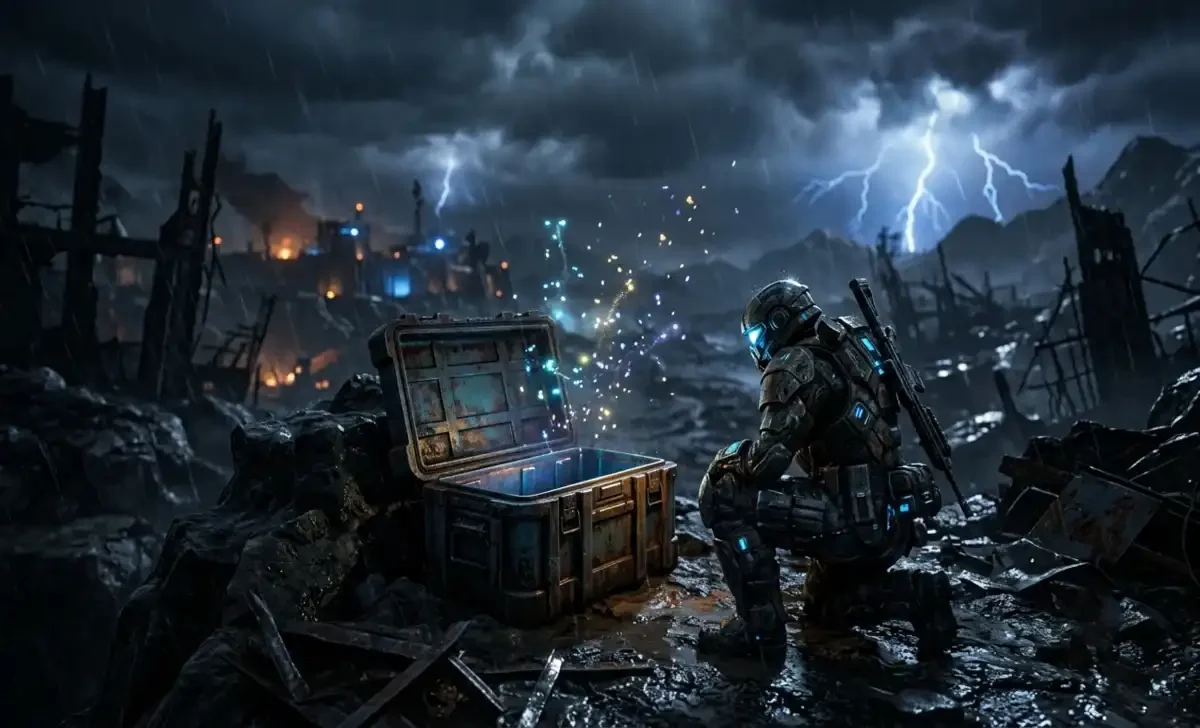
Something changed in Arc Raiders, and players noticed before any patch notes confirmed it. Runs that used to reliably end with a rare blueprint now often end empty-handed. The shift wasn't in your head, and it wasn't bad luck — Embark Studios deliberately recalibrated how often rare blueprints drop from certain caches, and the ripple effects are reshaping how experienced players approach every raid.
What Changed, in Plain Terms
Embark tightened rare blueprint drop rates from a specific cache type tied to a particular storm-based map condition. The goal wasn't to punish players — it was to correct an economy that had tipped out of balance. Rare gear only stays meaningful if it stays rare, and dedicated players had gotten so efficient at clearing these caches that blueprint supply began outpacing demand across the entire player base.
As a counterweight, Embark increased the rate at which high-tier crafting materials drop from those same caches. So the caches didn't get worse overall — they got reshaped. Less blueprint upside, more material reliability.
Crucially, this change was narrow. Caches tied to other map conditions, and blueprint sources outside the storm-condition loop entirely, were left alone. If your farming route already spanned multiple conditions, you likely haven't felt much difference. If you were leaning heavily on one specific route, that's exactly where the gap shows up.
Why the Community Reaction Has Been So Strong
Reasonable-sounding logic from a developer rarely softens the experience of grinding through empty extractions. Across community forums, the recurring complaint isn't a modest reduction in odds — it's stringing together several full raids in a row without a single meaningful drop. That crosses a line from "rarer" into "unrewarding," and unrewarding grinds are what push engaged players toward disengagement rather than persistence.
What makes this notable is who's complaining loudest: not newcomers with unrealistic expectations, but long-time players who know the maps and routes cold. When your most dedicated audience is the group voicing frustration, that's usually a sign the correction landed harder than intended, regardless of whether the underlying goal made sense.
This tension — a system controlling outcomes that players feel they've earned through effort — echoes conversations well beyond gaming. It's the same friction driving debate around how generative AI is reshaping creative work and who deserves credit when an algorithm, rather than a person, determines the result. And the sense of investment without payoff isn't unique to loot systems either — it's the same disappointment fans expressed over unresolved storylines, like the reaction to Paul Anderson's absence from the Peaky Blinders movie. People commit time and attention, and they expect something to show for it.
The Players Feeling It Most
Anyone with limited play sessions per week is disproportionately affected. Casual players rely on small, consistent payoffs to make each session feel worthwhile — a rare blueprint after a hard-fought extraction is often the entire reason a short session feels like progress. Without that payoff, even a well-played run can feel hollow.
If you're comparing your results to older community guides and wondering why things feel off, remember this: the change only touched one specific cache-and-condition combination. Everything else in the blueprint economy is exactly as it was. Mixing your farming routes rather than committing to a single condition is the simplest way to close that gap.
Smarter Ways to Farm Right Now
Treat storm-condition caches as a materials source first, blueprints second. The odds shift specifically targeted rare blueprint pulls, not crafting components, so those caches remain one of the stronger options if materials are your actual bottleneck.
Rotate across map conditions instead of repeating one. Blueprint pools outside the affected condition are untouched, so spreading your sessions across different conditions naturally increases your overall chances.
Prioritize speed and route knowledge over hoping for luck. When odds per cache go down, the players getting the best outcomes are the ones completing more clean runs per session — meaning efficient movement and cache-location familiarity now matter more than they used to.
Track your own outcomes before assuming the worst. Community-wide data takes time to stabilize after any economy change, and individual variance is real. This mirrors a broader shift seen in performance tracking across competitive spaces — including golf, where advances in tracking technology have changed how players evaluate their own game rather than leaning on generalized averages. Log your own sessions before concluding the patch hit you harder than it hit everyone else.
The Deeper Issue: A Loot System Built Entirely on Chance
Adjusting a drop rate treats a symptom, not the underlying design problem. Right now, Embark's only real tool for correcting economy imbalances is an invisible probability dial — and every turn of that dial redistributes frustration instead of resolving it. Players can't plan around odds they can't see, which means this same cycle is likely to repeat with future updates unless something structural changes.
A handful of fixes the community keeps proposing would address the root cause rather than the symptom:
Duplicate protection. If a player already owns a blueprint, the odds on future pulls should shift toward something they don't yet have. This doesn't oversaturate the economy — it just removes the specific sting of repeatedly pulling gear you already unlocked.
Directed farming paths. Not a guaranteed outcome, but a way to lean the odds toward a chosen blueprint category through specific in-game activity. Players gain a sense of agency without removing the underlying uncertainty that makes extraction shooters compelling.
Consistent rewards tied to play, not chance. A parallel progression track — one that rewards showing up and completing objectives regardless of drop variance — would give casual players a dependable path forward that doesn't hinge on a storm-condition cache cooperating.
None of these remove randomness from the game entirely, and they shouldn't — risk and uncertainty are part of what makes extraction shooters engaging. But they would shift the underlying feeling from hoping the game rewards you to knowing what your effort is building toward, which is the real complaint sitting underneath most of the frustration right now.
Where Things Go From Here
If you're still playing, the practical approach is straightforward: keep storm-condition caches in rotation for materials, diversify your routes for blueprints, prioritize efficient runs over grinding a single condition, and keep sending feedback through official channels — Embark has adjusted course before in response to community input. This isn't the end of meaningful progression. It's a rebalancing that rewards route variety and efficiency more than it used to.
Frequently Asked Questions
Did every blueprint source get affected by this change?
No. Only rare blueprint drops tied to one specific cache type under one storm-based map condition were adjusted. Every other blueprint source remains unchanged.
Should players still farm the affected caches?
Yes, especially for materials. High-tier crafting component drops from those caches actually improved as part of the same change. If blueprints are the priority, spread sessions across other map conditions instead.
Why did the developer make this change in the first place?
Because dedicated players had become efficient enough at clearing these specific caches that blueprint supply outpaced demand, undermining the value of rare gear across the entire economy.
What's the most effective way to farm blueprints now?
Rotate between map conditions rather than repeating one, learn cache locations well enough to complete more runs per session, and treat the affected caches as a materials source rather than a blueprint source.
Is the game still worth playing after this adjustment?
Yes. The core extraction loop hasn't changed, and the adjustment is narrow in scope. Diversifying your farming routes largely offsets the difference.
Will the developer make further changes to this system?
There's no confirmed plan, but the developer has a track record of responding to sustained community feedback on economy adjustments, so continued input through official channels remains the most effective path toward further change.