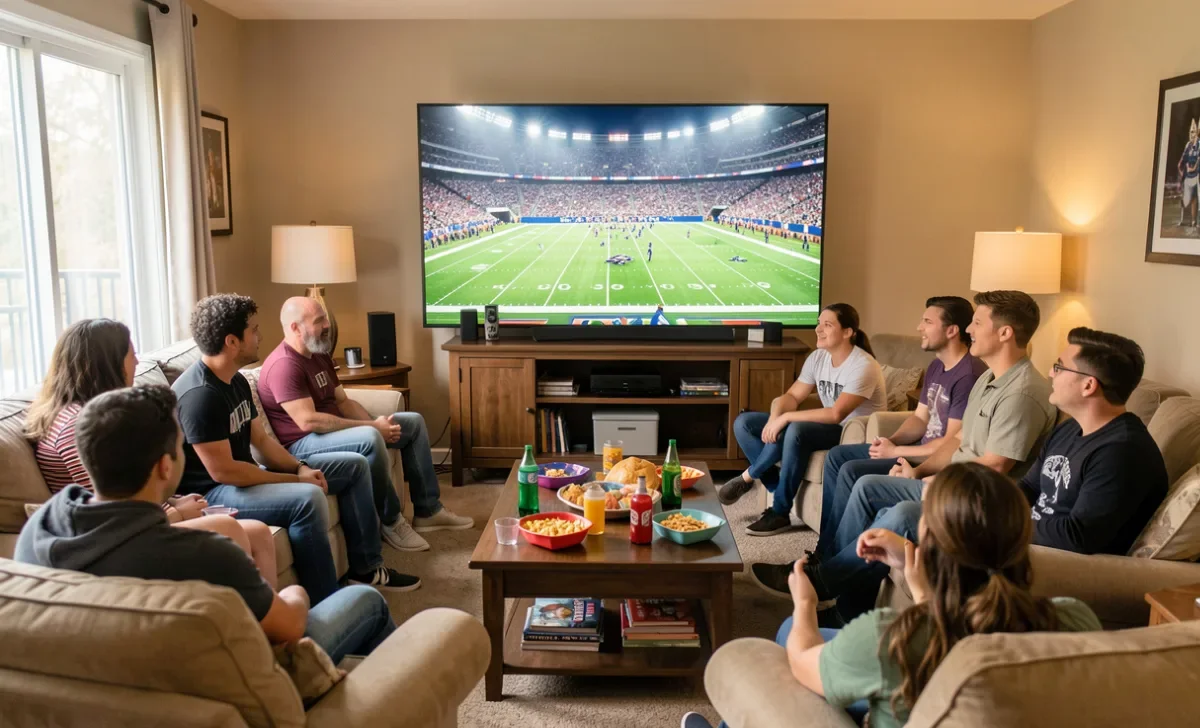
Super Bowl LX viewership averaged 125.6 million viewers across NBC, Peacock, Telemundo, NBC Sports Digital, and NFL+, according to Nielsen's final revised figures. That total makes it the second-most-watched television event in U.S. history, just behind Super Bowl LIX's record of 127.7 million in 2025.
The slight dip of about 2.1 million viewers, or roughly 1.6%, came from a combination of factors: a one-sided game that lost competitive tension early, a data glitch that initially undercounted the audience, and a media landscape where more people watch across more screens than ever before. It wasn't a sign that fans are walking away from the Super Bowl. It was a reflection of how live sports viewing is shifting.
What the Final Super Bowl 2026 Numbers Actually Show
Nielsen reported an initial figure of 124.9 million viewers on game night. A data glitch from one streaming provider caused an undercount, and the corrected number landed at 125.6 million.
That revised total covers every platform where the game aired: NBC broadcast, Peacock streaming, Telemundo's Spanish-language coverage, NBC Sports Digital, and NFL+. Nielsen's Big Data + Panel method pulls in more viewing data than older systems, including out-of-home screens and connected devices.
By any standard, that number is massive. Super Bowl LX ranks as the most-watched event in NBC's broadcast history and the second most-watched U.S. telecast ever. The only program that tops it is last year's Super Bowl LIX.
Why Super Bowl LX Viewership Dropped Below Last Year
The Seattle Seahawks controlled this game from the opening drive. Their defense shut down the Patriots consistently, and the final score of 29-13 reflected how one-sided the matchup was.
When a Super Bowl gets lopsided early, casual viewers tend to leave. If you've been at a watch party when the score gets out of hand, you know how it goes. Conversations shift, guests start heading out, and some people just turn off the TV before the fourth quarter. That pattern shows up in the ratings every time a Super Bowl loses its competitive tension.
The matchup itself also worked against broader reach. Teams from cities like New York or Los Angeles tend to pull in larger casual national audiences. Seattle has passionate fans, but it doesn't move the needle the same way in terms of total U.S. viewership. Once the third quarter started and the result felt settled, plenty of viewers switched off entirely or turned to other entertainment for the rest of the night.
None of these signals a long-term problem. One-sided games happen. They always have a cost in casual viewership, and this year was no different.
How Nielsen Counts the Audience (And Why It's Not Exact)
This is the part most recaps skip over, but it matters if you want to understand the Super Bowl LX ratings properly.
Nielsen didn't just count people watching NBC on a traditional TV set. The Super Bowl 2026 viewership total includes streaming platforms, out-of-home locations, and connected devices. Nielsen's Big Data + Panel method is newer and broader than what was used just a few years ago. It tries to capture how people actually watch today: on phones, tablets, laptops, and TVs in bars or airports. Streaming is growing in unexpected places, including in cars and on connected vehicle screens, which shows just how spread out modern viewing has become.
Here's where it gets complicated. These tools are still evolving. Last year's record was measured under a slightly different version of the same system. So comparing 2025 to 2026 isn't a perfect one-to-one comparison. Both totals are massive, but small methodological differences can shift figures by a few million either way. The data glitch that initially dropped the count to 124.9 million is a good example of how even the most sophisticated systems aren't immune to error.
Bad Bunny's Halftime Viewership Told Its Own Story
Bad Bunny's halftime performance drew 128.2 million viewers, which is actually higher than the overall game average. That tells you something clear: a significant number of people tuned in specifically for the show, not the football.
That total ranks fourth all-time for halftime viewership. Kendrick Lamar's performance at Super Bowl LIX last year holds the top spot with 133.5 million. Michael Jackson in 1993 and Usher in 2024 round out the top three. Bad Bunny's set generated an enormous amount of social media activity within minutes of ending. Clips spread across every platform before the night was over, reaching fans who weren't watching live at all.
The Super Bowl halftime show has become its own event, separate from the game. Some people plan their evening around it specifically. Similar shifts are happening across other live sports as well, where leagues are investing in entertainment formats designed to hold attention beyond the core competition. The halftime show is the NFL's version of that thinking, and by the Bad Bunny numbers, it's still working.
The Super Bowl LX Peak Audience Moment
Here's the number that deserves more attention than it got: 137.8 million people were watching at the peak moment during the second quarter.
That peak set a new all-time U.S. record for any live broadcast moment across any type of programming. So while the overall Super Bowl LX viewership average came in slightly below last year's record, that single moment topped everything ever measured on American television.
Peak viewership spikes during tense plays, big momentum shifts, or the stretch just before halftime. The second quarter tends to be when casual viewers are most engaged, before the score reveals itself and the outcome starts to feel certain.
What These Numbers Mean for the Next Few Seasons
The broader picture here isn't about one year's slight dip. It's about where the Super Bowl audience is heading over the next few seasons.
Since the early 2000s, viewership has climbed steadily. Back then, drawing 90 to 100 million felt like a genuine achievement. Now, anything below 120 million would be a real story. The baseline has moved up significantly, and 125 to 130 million is becoming the normal range.
Streaming will keep reshaping these totals. Peacock and NFL+ are growing their audiences year over year. International viewership, which doesn't fully factor into U.S. Nielsen totals, is expanding as the league pushes into new markets. Those global audiences represent real growth that the current measurement system doesn't fully capture yet.
The question isn't whether the Super Bowl is losing fans. It's whether the way we measure those fans can keep up with how they actually watch.
Frequently Asked Questions
Did Super Bowl LX break the all-time viewership record?
No. Super Bowl LX viewership averaged 125.6 million, just below the record of 127.7 million set by Super Bowl LIX in 2025. It ranks as the second-most-watched program in U.S. television history.
What were the final Nielsen numbers for Super Bowl 2026?
Nielsen's revised final figure is 125.6 million average viewers. The initial report of 124.9 million was corrected after a data glitch from one provider was identified and resolved.
Why was Super Bowl LX viewership lower than last year?
A few factors contributed. The game became lopsided early, with Seattle's defense controlling the Patriots throughout. One-sided games consistently lose casual viewers as the night goes on. The matchup also lacked a large-market team that would pull in broader national audiences. Slight differences in how Nielsen measured this year versus last year may also account for a small part of the gap.
How many people watched Bad Bunny's halftime show?
Bad Bunny's halftime performance drew 128.2 million viewers, higher than the game's overall average. It ranks fourth all-time for halftime show viewership, behind Kendrick Lamar (133.5 million in 2025), Michael Jackson (1993), and Usher (2024).
Disclaimer: Viewership figures in this article are based on Nielsen's revised final data as reported by NBC and major sports media outlets in February and March 2026. Nielsen's Big Data + Panel methodology is still developing, and figures may be updated further as measurement tools improve.