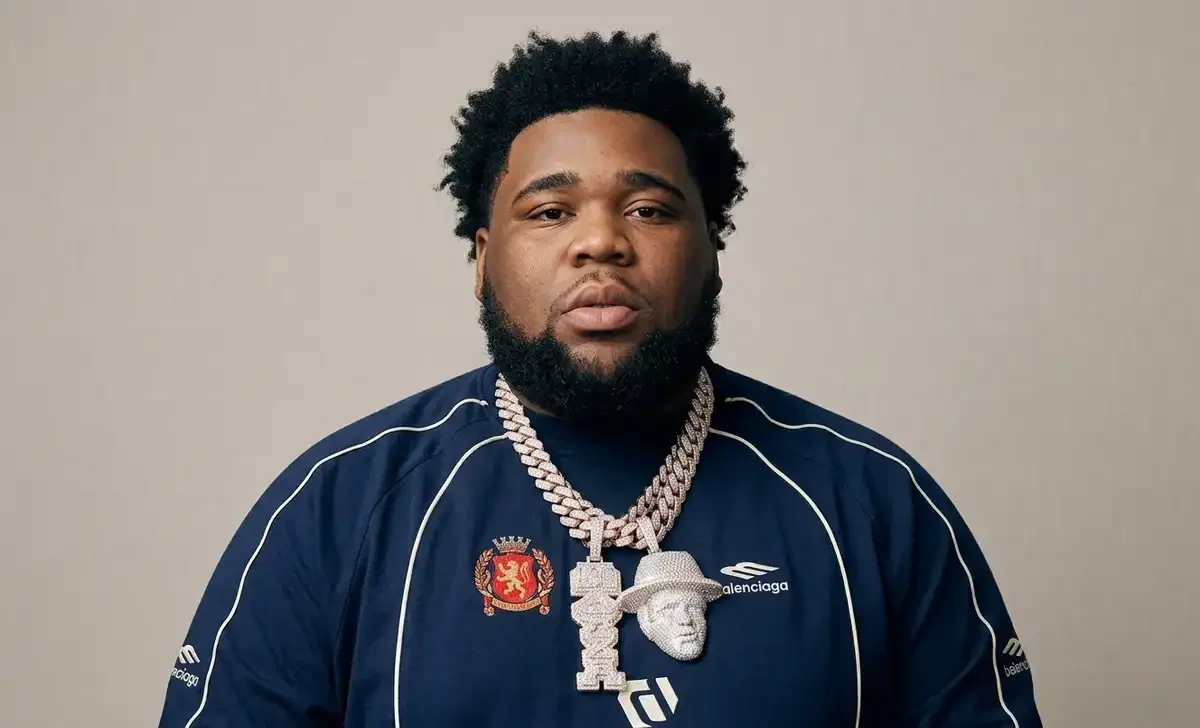
Rod Wave — born Rodarius Marcell Green on August 27, 1999 — grew up in St. Petersburg, Florida. He built his career without a manufactured image or a viral PR moment. Instead, he used emotional honesty, Southern rap, and raw melodic soul to connect with listeners who had lived through something real.
His 2019 project Ghetto Gospel put him on the radar. In 2020, Pray 4 Love debuted at number two on the Billboard 200. In 2021, SoulFly hit number one. As of 2026, he is 26 years old and signed to Alamo Records with distribution through Interscope — a structure that gives him major-label reach while preserving meaningful creative control.
That career arc is exactly why his financial profile is worth examining in detail.
Rod Wave Net Worth in 2026: The Estimate
Current estimates place Rod Wave's net worth at $4 million to $6 million, with some projections trending higher depending on touring cycles and Catalog performance.
Forbes has not published a dedicated profile — the publication typically reserves that coverage for artists who have crossed into business-mogul territory — but music industry analysts and celebrity finance trackers consistently confirm that his accumulated wealth is substantial and still growing.
Here is a simplified wealth timeline based on known deal structures, streaming benchmarks, and public career activity:
| Year | Estimated Net Worth |
|---|---|
| 2020 | ~$500,000 |
| 2021 | ~$1.5 million |
| 2022 | ~$2.5 million |
| 2023 | ~$3.5 million |
| 2024 | ~$4.5 million |
| 2026 | ~$4 million – $6 million |
These figures are estimates. Rod Wave has not publicly disclosed his earnings, and the ranges reflect the difficulty of accounting for private touring income, licensing deals, and merchandise margins.
How Rod Wave Makes His Money
1. Streaming Revenue
Streaming is Rod Wave's most consistent income pillar. His catalogue includes multiple platinum-certified projects, and individual tracks like Heart on Ice, Tombstone, and Richer have accumulated hundreds of millions of plays across Spotify, Apple Music, YouTube, and Tidal.
At standard Spotify rates of $0.003–$0.005 per stream, an artist with billions of lifetime streams can generate several million dollars over time — though label splits and distribution fees reduce what reaches the artist directly.
Practical example: If Rod Wave averages 500 million streams annually across platforms and receives a blended rate of $0.003 per stream, gross streaming income before label splits would be approximately $1.5 million per year. After a typical 80/20 or 75/25 label split, the artist's share would be roughly $300,000–$375,000 annually from streaming alone — before considering catalogue depth, sync licensing, and YouTube monetisation on top.
His YouTube channel adds another layer. Music videos that pass tens of millions of views generate ad revenue and Content ID royalties that compound across his entire catalogue.
2. Touring and Live Shows
Touring is where modern artists make the most money in a single earnings cycle.
Based on industry benchmarks for artists selling out mid-size arenas and amphitheatres, Rod Wave likely earns between $150,000 and $500,000 per show, depending on venue capacity, ticket pricing structure, and whether he is headlining or co-headlining.
A full tour run of 30 dates at an average of $200,000 per show — after expenses — would generate $6 million in gross revenue per cycle. The artist's share after management (typically 15–20%), booking agency fees (10%), and production costs still represents a major income event.
His touring fanbase is notably consistent. Pre-sale numbers for Rod Wave shows regularly outperform artists with comparable streaming metrics, which speaks to the depth of his audience loyalty.
3. Record Deal and Album Royalties
Under his arrangement with Alamo Records and Interscope, Rod Wave receives advances against royalties on each project, plus a negotiated royalty rate on sales and streams.
Artists at his commercial level typically negotiate royalty rates between 18% and 22% on recorded music revenue. On platinum-certified albums with strong catalogue longevity, that means royalty income continues accruing years after a project's initial release.
RIAA certifications confirm significant sales volume across multiple projects — Pray 4 Love, SoulFly, Beautiful Mind, and others all carry multi-platinum status, meaning the royalty base is deep.
4. Merchandise
Merchandise is one of the most underestimated income streams in music. Rod Wave has released branded apparel and accessories tied to album cycles, available at concerts and through online drops.
For artists with tight-knit fanbases, merchandise profit margins can exceed those from recorded music on a per-unit basis. A $50 hoodie with a $15 production cost at a sold-out show represents a margin that streaming cannot match. Artists at Rod Wave's level routinely generate $500,000 to $2 million per tour cycle from merchandise alone.
5. Sync Licensing and Placements
As his catalogue matures, sync licensing — placing his music in film, television, commercials, and video games — becomes an increasingly valuable income source. Sync deals can range from $5,000 for an independent production to $500,000 or more for a major film or advertising campaign.
Heart on Ice in particular has strong crossover appeal that makes it viable for emotional scenes in television drama and film. As streaming platforms expand globally, catalogue licensing income will only grow.
Rod Wave's Assets: What He Owns
Real Estate
Rod Wave has spoken about wanting to provide stability for his family — and real estate reflects that priority. He is based in Florida, where property values vary widely but his income level suggests a primary residence in the $800,000–$1.5 million range. Florida's tax structure (no state income tax) also makes it financially sensible for high earners.
Vehicles
Rod Wave has been photographed with luxury SUVs and has referenced cars in his music as markers of his journey from scarcity to security. For artists from low-income backgrounds, vehicles often carry emotional weight beyond practical utility — they represent proof of distance travelled.
Music Catalog
This is arguably his most valuable long-term asset. A catalogue with multiple platinum projects, billions of streams, and ongoing audience loyalty compounds in value over time. Music catalogues have sold for multiples of annual royalty income — typically 15–25x annual earnings for commercially active artists. If Rod Wave's catalogue generates $1 million per year in passive royalties, its market value could already exceed $15 million.
Rod Wave's Personal Life
Is Rod Wave Married?
As of 2026, Rod Wave has not confirmed a marriage. He is a father and regularly references his children in interviews and music, but he keeps his romantic life private. His emotional transparency in songs creates a sense of closeness with fans, while he deliberately protects specific personal details from public scrutiny.
Body Image and Public Identity
Rod Wave has spoken openly about his physical appearance and choosing not to conform to industry image expectations. That authenticity is central to his brand — his audience respects him precisely because he does not perform a version of himself for industry approval.
How Rod Wave Compares to Other Artists
Understanding his financial position requires context.
Jay-Z holds the title of richest rapper in the world, with a net worth exceeding $2.5 billion. His wealth was built not just on music but on strategic equity in Armand de Brignac champagne, D'Ussé cognac, Tidal, real estate, and entertainment ventures. Jay-Z was not a billionaire at 26 either.
Drake sits at approximately $250 million, built on a combination of music royalties, his OVO brand, and equity stakes in companies including Virginia Black whiskey and the Toronto Raptors.
NBA YoungBoy (YoungBoy Never Broke Again) is the most direct comparison to Rod Wave — a Southern artist with a streaming-dominant career and deeply loyal fanbase. YoungBoy's estimated net worth of $6–8 million places him slightly ahead, reflecting a longer release history and higher touring volume.
For perspective on how sustained careers in entertainment build lasting wealth, it is worth looking at actors who navigated their own financial journeys. The Jodie Sweetin net worth profile on illustrates how childhood fame translates (or doesn't) into lasting financial security — a contrast to Rod Wave's earned, bottom-up trajectory.
Big Daddy Kane, the golden-era hip-hop legend, has an estimated net worth of $1–3 million — a stark reminder of how much the financial structure of the music industry has changed. Earlier generations lacked the streaming residuals, direct merchandise channels, and catalogue valuation tools that today's artists benefit from.
Why Rod Wave's Wealth Will Keep Growing
Several structural factors work in his favour:
Catalog depth. Multiple platinum albums mean passive income that does not require new releases to sustain itself. The older his catalogue gets, the more licensing and sync opportunities emerge.
Audience loyalty. Rod Wave's fanbase is not trend-dependent. His listeners are not there for a moment — they are there for the music. That loyalty translates into consistent touring revenue regardless of the current chart landscape.
Age advantage. At 26, Rod Wave is near the beginning of a career that could span decades. Artists like Elton John — whose net worth is estimated at approximately $550 million after five decades, including a farewell tour that grossed over $900 million — demonstrate what sustained emotional connection to an audience can build over time.
The Olsen twins' net worth offers an interesting parallel from a different industry: entertainers who started young, built deep brand equity, and eventually converted audience attention into business ownership. The financial mechanics differ, but the principle of audience loyalty compounding into wealth is the same.
Streaming growth. As global streaming markets expand in South America, Africa, and Southeast Asia, artists with emotionally universal music stand to benefit disproportionately. Rod Wave's themes — grief, struggle, love, resilience — translate across cultures in ways that trend-specific rap often does not.
What Rod Wave Could Do to Accelerate His Wealth
Most artists at his level leave money on the table in predictable ways. Here is where the opportunity sits:
Catalogue ownership. If Rod Wave negotiates to own or co-own his masters on future projects, his long-term wealth trajectory changes significantly. Music Catalog sales have made many artists far wealthier than their active careers alone.
Business equity. Artists who transition from performers to owners — whether in spirits, clothing, or media — tend to accelerate past their peers financially. Jay-Z is the most cited example, but mid-tier transitions (like those examined in the Steve Carell net worth profile) show how sustained professional output combined with smart equity decisions compounds over decades.
Touring expansion. International touring remains relatively underexplored for Rod Wave. UK, European, and Australian audiences have a strong appetite for authentic American rap-soul — markets that could meaningfully expand his per-cycle touring revenue.
Rod Wave Net Worth vs. Other Artists: Quick Reference
| Artist | Estimated Net Worth (2026) |
|---|---|
| Jay-Z | $2.5 Billion |
| Drake | ~$250 Million |
| Elton John | ~$550 Million |
| YoungBoy Never Broke Again | ~$6–8 Million |
| Rod Wave | ~$4–6 Million |
| Big Daddy Kane | ~$1–3 Million |
Conclusion
Rod Wave built his net worth the same way he built his audience — through consistency, emotional honesty, and refusing to take shortcuts.
At 26, with $4–6 million in estimated wealth, a catalogue stacked with platinum certifications, and a touring fanbase that shows up every cycle, he is not yet in the conversation for the richest rapper in the world. But he is absolutely in the conversation for the most financially durable artist in his tier.
The combination of passive catalogue income, loyal touring revenue, and growing international appeal means his ceiling is not close. Artists with this profile — deep audience connection, age on their side, and multiple income streams already running — tend to see the most significant wealth accumulation in their 30s, not their 20s.
Rod Wave is just getting started.
Frequently Asked Questions
What is Rod Wave's net worth in 2026?
Estimates place it at $4 million to $6 million, based on streaming royalties, album sales, touring income, and merchandise. Some projections trend higher depending on tour cycle activity.
How much does Rod Wave make per show?
Based on his venue sizes and fanbase strength, he likely earns between $150,000 and $500,000 per performance. Full headlining tour cycles can generate several million in gross revenue.
Is Rod Wave a millionaire?
Yes. With multiple platinum albums, consistent touring, and a catalogue generating ongoing royalties, his accumulated wealth comfortably exceeds the $1 million threshold — with a continued upward trajectory.
Does Rod Wave own his masters?
The specific terms of his deal with Alamo Records and Interscope are not publicly disclosed. Most major-label deals give the label ownership of master recordings, though artists can negotiate co-ownership or reversion clauses.
How does Rod Wave's net worth compare to YoungBoy's?
YoungBoy Never Broke Again is estimated slightly higher at $6–8 million, reflecting a longer active release history. Both artists operate in the same lane: streaming-dominant, touring-reliable, and trend-independent.
Is Rod Wave married?
As of 2026, Rod Wave has not publicly confirmed a marriage. He is a father and references his family in music, but keeps his romantic life private.
Where does Rod Wave live?
He is based in Florida, consistent with his St. Petersburg roots. Florida's lack of state income tax makes it a financially practical base for high earners.
What is Rod Wave's most valuable asset?
His music catalogue. Multiple platinum projects generating ongoing royalties represent a long-term compounding asset that increases in value as licensing opportunities expand.