AI demand has stopped being a headline and has become a line item. It shows up in corporate budgets, national infrastructure plans, and hiring decisions — not just in press releases about the "AI revolution." Yet most coverage of this shift sits at two extremes: breathless hype ("AI will change everything") or vague anxiety ("AI will take your job"). Neither extreme helps a business owner decide what to actually do this quarter.
This guide skips both. It breaks down the real forces behind AI demand in 2026, who is capturing the value, where the friction points are, and what a grounded response looks like — whether you run a five-person shop or oversee enterprise procurement.
What Is "AI Demand," Really?
AI demand isn't just people using ChatGPT or Claude. It's a layered economic force spanning four interconnected markets:
- AI-powered software — SaaS products, APIs, and embedded features inside existing tools
- AI hardware — GPUs, custom AI chips, and the servers that house them
- AI talent — engineers, model trainers, evaluators, and the newer compliance and integration roles
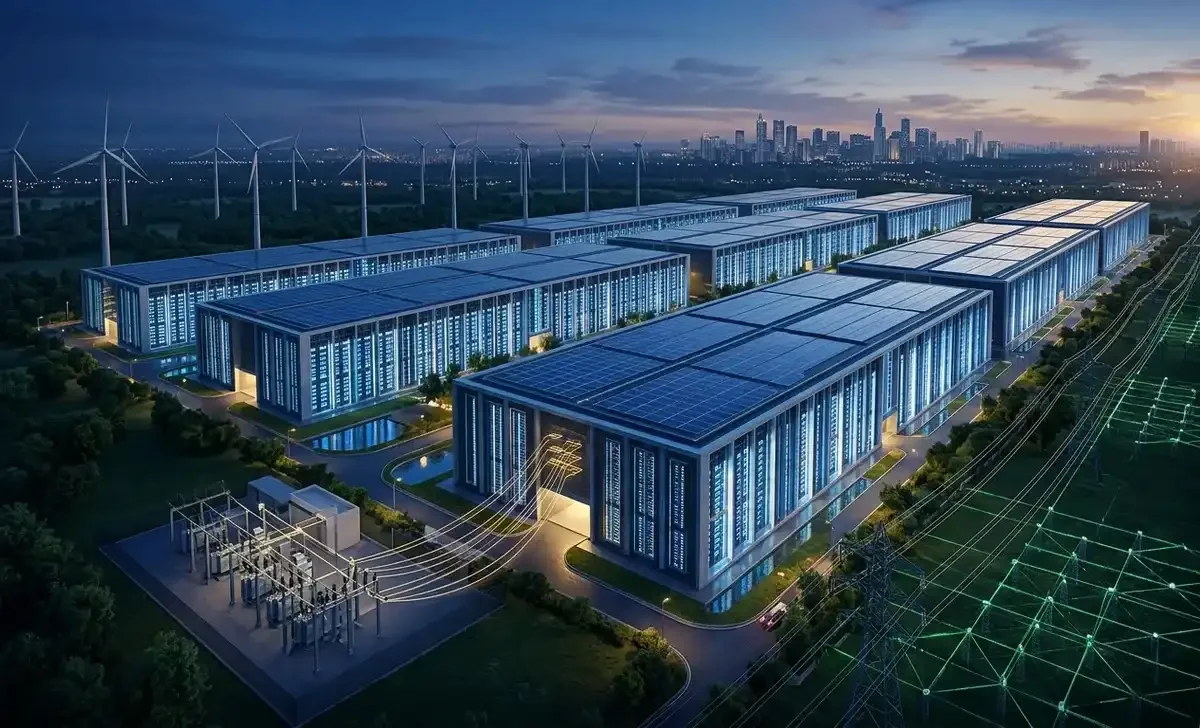
- AI infrastructure — data centers, power grids, and the cloud networks connecting all of it
A useful comparison is the smartphone era. When the iPhone took off, demand didn't stop at the device — it cascaded into app stores, mobile data plans, accessories, and repair shops. AI demand behaves the same way: a single model release can ripple into chip orders, power contracts, and new job categories within months.
Practical example: When a company adopts an AI coding assistant, the visible purchase is a software subscription. The invisible follow-on demand includes more cloud compute (to run the assistant's queries), more code-review capacity (to check its output), and often a new internal role — an "AI tooling lead" — to manage rollout across teams. One subscription, three downstream demand effects.
The Hardware Boom: Chips, GPUs, and Who's Racing to Catch Up
No AI runs without chips, and that fact has made semiconductor capacity one of the most strategically contested resources of the decade.
NVIDIA's data-center GPUs remain the default choice for large-scale model training, with Google, Meta, Microsoft, and Amazon among the largest buyers. That demand has pulled Nvidia's manufacturing partners — including Foxconn — into record-revenue territory simply from fulfilling AI-related orders.
Why this matters beyond the tech sector:
- Chip scarcity raises costs across the entire AI stack, from model training to the price of the software built on top of it
- Governments now treat semiconductor access as a national-security issue, not just a supply chain problem
- Competitors — AMD, Intel, and newer entrants like Groq — are racing for market share, which should eventually pull prices down, though that hasn't fully materialized yet
Practical example: A mid-sized logistics operator planning a route-optimization rollout can find its timeline dictated entirely by GPU availability and cloud compute pricing rather than by its own engineering readiness. Hardware access isn't an abstract macro concern — it directly sets project timelines for ordinary companies with no involvement in chip manufacturing.
Enterprise Software: Where the ROI Is Actually Showing Up
Every major enterprise vendor — Microsoft, Salesforce, SAP, and others — has embedded AI into its core products. Businesses are paying for these features because the return is measurable, not because AI is fashionable.
Where enterprise AI is delivering results today:
- Customer service — AI handling high ticket volumes without proportional headcount growth
- Sales — personalized outreach at a scale that previously required large SDR teams
- Finance — faster fraud detection and forecasting than manual models typically achieve
- HR — resume screening and interview scheduling largely automated
Microsoft's Copilot has grown into a multi-billion-dollar product line, which is a durable demand signal precisely because it's ROI-driven rather than hype-driven.
The organizational structure behind these companies is shifting to match that commercial ambition. OpenAI's changes to its COO structure reflect a broader pattern: AI labs are reorganizing around enterprise execution, not just research output — a signal that operational discipline now matters as much as model quality when it comes to sustained demand.
Cloud Providers: The Clearest Immediate Winners
Amazon Web Services, Microsoft Azure, and Google Cloud are currently the most direct beneficiaries of AI demand, and their earnings consistently reflect it.
Each now offers:
- Pre-built AI APIs for speech, vision, and language tasks
- Custom model hosting for enterprise deployments
- Rentable GPU compute for training and inference
- Full development toolchains for building AI features in-house
The cloud model matters because it makes AI accessible to companies that can't buy hardware outright. A regional healthcare provider, for instance, can run a diagnostic model on rented compute rather than building a multi-million-dollar server farm — turning what used to be a capital expense into an operating one.
Competition among the three giants is intensifying: Google is pushing Gemini aggressively, Amazon is weaving AI into nearly every AWS service, and Azure continues to lean on its OpenAI partnership. That rivalry should compress prices over time and unlock demand from companies currently priced out.
Government Spending: The Demand Floor Beneath the Market
Private investment gets the headlines, but government spending is what makes AI demand structurally resilient rather than cyclical.
The U.S. CHIPS Act has committed hundreds of billions of dollars to domestic semiconductor production. The EU is funding AI research infrastructure. China is deploying state capital at scale. Saudi Arabia, the UAE, and India each have national AI strategies backed by sovereign wealth funds.
Why governments are prioritizing this:
- AI has direct military, surveillance, and intelligence applications
- Economic competitiveness over the next decade is increasingly tied to AI capability
- Healthcare systems, public services, and energy grids are being redesigned around AI tools
The military dimension is especially significant. The U.S. government's Golden Dome missile defense program depends on AI-powered tracking and targeting systems, representing a category of government AI spending that goes well beyond routine software procurement and into long-horizon defense contracts — the kind of spending that doesn't disappear in a downturn.
This government commitment creates a floor under overall demand. Even if private investment cools, state-funded programs tend to continue, which is a major reason most analysts aren't forecasting a sharp AI-spending collapse.
Global Competition: The U.S. Isn't the Only Story
Much of the Western coverage of AI treats the U.S. as the default center of gravity, but China's state-backed AI push has produced a genuinely competitive, parallel tech stack — not an imitation of Western products.
From Baidu's Ernie Bot to the open-source DeepSeek model that rattled global markets in early 2025, China's AI assistants reflect different regulatory incentives and national priorities. For businesses operating internationally, this matters practically: vendor choice, data residency rules, and compliance requirements increasingly diverge depending on which AI ecosystem you're building on.
Practical example: A company expanding into Southeast Asia may find that the most cost-effective, locally optimized AI tools aren't the Western products it uses at home, but regional alternatives built around local languages and regulatory requirements. Ignoring this bifurcation can mean overpaying for a tool that underperforms outside its home market.
Small Businesses: The Quietest, Largest Demand Wave
For years, AI tools required engineering teams and serious capital. That's no longer true, and it's arguably the most underreported part of the AI demand story.
Low-cost subscriptions, no-code interfaces, and immediate output have brought AI within reach of businesses that could never have justified an enterprise software budget.
Real-world small business use cases:
- A solo e-commerce seller using AI to draft 200 product descriptions in an afternoon instead of a week
- A two-person law firm using AI to produce first-pass contract summaries before attorney review, cutting review time significantly
- A local restaurant automating responses to online reviews and messages outside business hours, without adding staff
There are hundreds of millions of small businesses globally. Even modest adoption rates translate into a demand wave larger than most enterprise software markets — and adoption is still in its early stages.
Emerging Markets: The Next Billion Users
Most AI coverage focuses on the U.S., Europe, and China, but the next wave of users is concentrated in India, Southeast Asia, Latin America, and Africa — markets with needs that global, English-first tools don't fully address.
Why these markets matter:
- Young, mobile-first populations with high smartphone penetration
- Strong demand for affordable productivity tools
- A need for local-language and culturally specific AI that generic global products often miss
Southeast Asia's AI startup funding grew sharply in 2024, and India now has dozens of funded startups building AI specifically for regional languages. These aren't future projections — they're active markets. Companies that build AI products while ignoring this segment are leaving substantial, addressable demand untapped.
The Job Market: What's Really Changing
This is the part people fear most, and the reality is more specific than "AI is taking jobs."
Roles contracting: data entry, basic content writing, tier-1 customer support, and repetitive financial analysis are being automated or meaningfully reduced.
Roles expanding: AI prompt engineers, model trainers and evaluators, integration specialists, and AI compliance officers — most of which barely existed five years ago.
The more accurate framing: the biggest individual career risk isn't AI replacing you outright. It's someone who uses AI more effectively than you, getting the opportunity instead.
Practical example: A marketing team of eight copywriters didn't shrink because of AI adoption. Two writers now produce the volume of output that previously required the full team, while the other six were redeployed into strategy, editing, and client-facing work. AI redistributed the labor; it didn't eliminate the team. This pattern — redistribution over pure elimination — is showing up more often than outright headcount cuts, though it isn't universal, and some roles genuinely are disappearing without replacement.
Supply Chain Constraints: Why Growth Will Stay Uneven
The uncomfortable truth is that supply is struggling to keep pace with demand, and that gap has real consequences.
Key pressure points:
- AI chip manufacturing relies heavily on TSMC in Taiwan — a geographic concentration that worries governments and investors alike
- Chip production depends on cobalt, lithium, and rare-earth minerals, many sourced from politically unstable regions
- Data centers require enormous amounts of electricity and water, and local communities are increasingly pushing back on new construction
- Training large models consumes electricity comparable to a small city's usage over extended periods
None of these signals an AI collapse. It signals that costs will stay elevated and growth will be uneven across regions and vendors. Anyone evaluating infrastructure investment or vendor stability should weigh supply-side risk as seriously as software capability.
The Hype Correction: A Healthy Sign, Not a Warning Sign
Every major technology wave goes through a reality check, and AI is in the middle of one now.
Not every enterprise AI project is delivering the returns it promised. Some deployments have been quietly shelved. Accuracy issues, hallucinations, data privacy concerns, and cost overruns have made early adopters more cautious the second time around.
This correction is a filter, not a failure. It's removing low-value, badge-slapped implementations ("we added an AI feature" with no real workflow change) and leaving behind the deployments that solve actual problems.
How to Evaluate AI Demand for Your Own Business
Before committing budget to an AI tool or initiative, two questions do most of the work:
Does this solve a specific, measurable problem in our workflow? Not "AI could help somewhere" — a named bottleneck with a before/after metric.
Can we calculate a clear ROI within 12 months? If the answer requires speculative future capability rather than current functionality, the timeline is too optimistic.
If both answers are genuinely yes, move forward with a narrow pilot. If either is no, it's reasonable to wait — the market is maturing quickly, and costs are trending down for most categories of tools.
A simple framework for getting started:
- Start narrow. Automate one high-friction workflow, measure the result, then expand — rather than attempting an organization-wide transformation at once.
- Watch infrastructure plays. Companies building the underlying layer — energy, chips, cooling, cloud compute — often have more durable demand than application-layer products whose value proposition can shift overnight.
- Fix data before evaluating tools. Most AI failures trace back to bad, incomplete, or poorly structured input data, not model quality.
- Build vendor flexibility. The vendor landscape is moving fast; avoid deep lock-in and architect for portability where possible.
- Track second-order effects. AI demand for chips creates demand for energy. AI demand for content creation creates demand for fact-checking and brand safety. The durable opportunities tend to sit one or two steps downstream of the obvious trend.
Common Mistakes to Avoid
- Treating AI demand as a speculative bubble. Unlike some past tech cycles, AI has immediate, measurable business utility that companies can calculate directly — that doesn't mean every valuation is justified, but the underlying demand is grounded in real productivity gains.
- Over-concentrating on one vendor. Platform risk is real; build flexibility into your stack instead of optimizing entirely around one provider's ecosystem.
- Ignoring compliance and regulation. The EU AI Act is already in force, and U.S. frameworks are developing. Ignoring this now creates legal and reputational exposure later, particularly in healthcare, finance, and HR.
- Treating AI as pure replacement rather than augmentation. The most successful deployments enhance human judgment rather than trying to remove it entirely — a framing shift that matters for adoption, quality control, and team morale.
- Skipping ROI calculation. AI tools carry real ongoing costs in subscriptions, integration, and maintenance. Without a defined return timeline, spending is driven by hype rather than value.
Conclusion
AI demand in 2026 is real, broad-based, and backed by both private capital and government spending that isn't going away in a downturn. It isn't a bubble in the way some earlier tech cycles were — it's a platform shift, comparable in scope to the move to mobile internet but unfolding faster.
The businesses and professionals who benefit most won't necessarily be the ones who adopted AI earliest. They'll be the ones who adopted it most deliberately: clear use cases, honest ROI expectations, and enough flexibility to adapt as the market — and the vendor landscape — continues to shift.
The real question isn't whether AI demand will touch your industry. It's whether you're positioning yourself to benefit from it, or simply reacting to it after the fact.
FAQs
What is actually driving AI demand in 2026?
A convergence of factors: mature large language models, falling cloud compute costs in some categories (even as chip costs stay elevated), enterprise software adoption at scale, sustained government investment, and dramatically lower barriers to entry for small businesses. No single driver explains it — it's the overlap of all five.
Will AI demand slow down soon?
Not significantly at the infrastructure level. Even if application-layer spending cools in places, energy, chip, and data-center investment is largely locked in through at least 2028 based on current commitments. The base layer of AI demand behaves more like infrastructure spending than consumer trend spending.
How does AI demand affect everyday consumers?
AI is quietly embedded in most digital products people already use — search engines, banking apps, streaming recommendations, navigation, and healthcare portals. Most of the time, it's invisible; you notice it when something works unusually well, or occasionally when it fails in an obvious way.
Is AI demand good or bad for employment?
Both, depending on the role and timeline. Some roles are genuinely contracting with no replacement; others are expanding into categories that barely existed five years ago. Most economists expect real short-term disruption alongside longer-term productivity gains, but the transition period is uneven and shouldn't be minimized.
Which industries currently have the highest AI demand?
Healthcare (diagnostics, drug discovery), financial services (fraud detection, trading models), logistics (route optimization, demand forecasting), and media/marketing (content generation, audience personalization) are the clearest high-demand sectors right now.
How should a small business owner approach AI adoption?
Pick one specific, measurable problem — response time, content production, scheduling — and pilot a tool against it for 30 days with defined success criteria before expanding. Avoid adopting AI broadly across the business without first validating it against a concrete constraint.
Is AI spending concentrated in a few large companies, or is it broad-based?
Both are in different layers. Hardware and infrastructure spending is concentrated among a small number of hyperscalers and chipmakers. But application-layer adoption — small businesses, regional startups, individual professionals — is genuinely broad-based and growing faster in percentage terms than the enterprise segment, even though it's smaller in absolute dollars.